


The End of the Hydrocarbon Era
By 2050, oil and gas reserves had reached a critical minimum. The energy cost of extracting a barrel of oil reached 30% of its energy content — extracting further simply became unprofitable. At the same time, emissions from ship engines running on fossil fuels were causing colossal damage to marine ecology. That is why the shift to electric propulsion became not just a choice but a necessity.
Ban on Tourist Vessels
Tourist vessels were the first to take the hit. Their diesel and gasoline engines were banned in most waters — the damage from their operation was deemed unacceptable. This became a catalyst: ports began building charging stations, and shipbuilders began designing electric vessels.
Nuclear Giants and Solar Sails
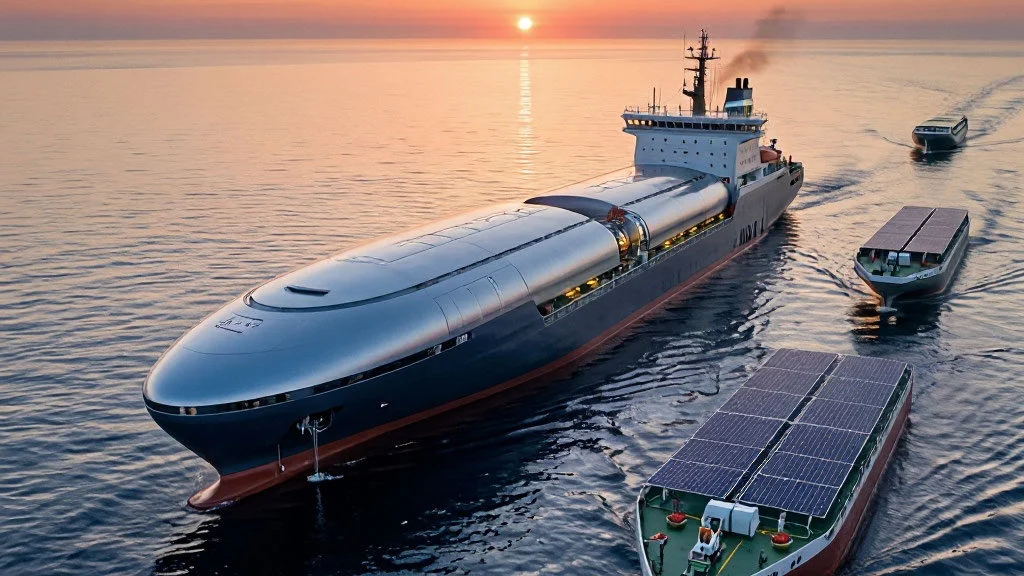
For large-tonnage vessels, a transition to nuclear power plants was planned and implemented. Now a ship can roam the ocean for years without refueling. Smaller vessels received solar panels and powerful storage units: they charge in port and continuously extend their range at sea.
| Vessel type | Power plant | Operational feature |
|---|---|---|
| Large-tonnage vessels | Nuclear power plants | Roam the ocean for years without refueling |
| Smaller vessels | Solar panels and powerful storage units | Charge in port and continuously extend their range at sea |
Battery Transfer Service
A special service was created — refueling vessels. They transfer powerful batteries directly on the open sea. If an electric vessel runs out of charge, such a refueler comes alongside and replaces the battery block. It is like swapping a gas cylinder, only for megawatt-hours.
The Example of Norway
We remember how Norway was the first to almost completely switch to electric cars. By the 2030s, there were practically no gasoline cars left there. This experience proved that abandoning hydrocarbons is possible. The fleet repeated this path, only on the scale of oceans.
Huge Advantages
The fleet gained incredible advantages:
- zero emissions into the atmosphere and ocean;
- silence instead of the roar of engines;
- independence from oil prices;
- fuel costs reduced severalfold;
- marine ecosystems began to recover;
- port cities breathed cleaner air.
The Future Has Already Arrived
Today, in 2050, we look back and realize: the transition to electric motors was inevitable. We did it. The global fleet has become clean, quiet, and efficient. And this is only the beginning.

Comments (2)
Классный образ! Было бы хорошо увидеть такое будущее, особенно на Байкале, где чистота воды имеет огромное значение. Думаю, главная сложность даже не в электродвигателях, а в том, как обеспечить большие суда энергией на дальних маршрутах.
Сильная сторона материала — идея модульной замены аккумуляторов в открытом море: она снимает главный барьер электроходов, долгую зарядку. Чтобы это стало не только образом, стоит проверить связку с «Рэнерой» (Росатом): её литий-ионные ячейки и контейнерные накопители дали бы готовую элементную базу, а Восточно-Сибирское речное пароходство — реальную акваторию и флот для пилота. Первый шаг — рабочая группа с ТЗ на судно-заправщик и регламентом замены блоков на рейде Байкала.