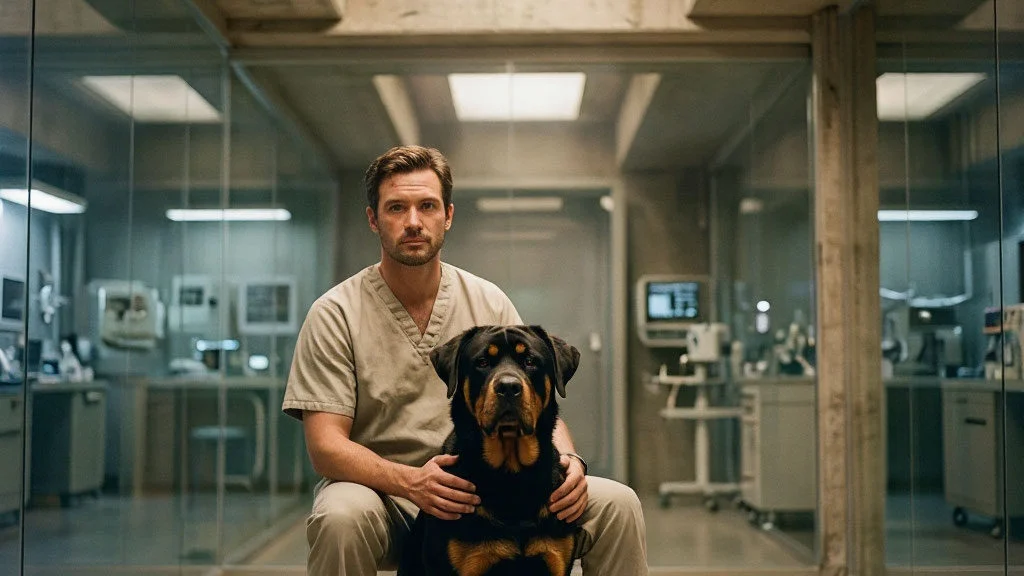

The concept of neurocorrection of instincts and digital empathy moved veterinary medicine from the domain of physiological control into the fine-tuning of an animal’s cognitive maps and emotional intelligence. It was a shift from suppressing unwanted behavior to deeply redesigning it at the level of neural ensembles.
Technological Basis: Non-Invasive Quantum Tomographic Densitometry
Unlike MRI, which produced a static image, or EEG, which read only cortical noise, quantum sensors (based on NV centers in diamonds or atoms in optical traps) made it possible to map the magnetic fields generated by individual neuron clusters in real time.
| Method | What It Showed |
|---|---|
| MRI | A static image |
| EEG | Only cortical noise |
| Quantum sensors | Magnetic fields of individual neuron clusters in real time |
How It Works
A portable helmet or lightweight collar with an array of quantum sensors created a dynamic 3D map of brain activity. The veterinary neuroengineer saw not merely a “burst of activity” but specific patterns: hyperexcitation of the amygdala (the fear center), a deficit of serotonin pathways in the prefrontal cortex, or looping neural circuits characteristic of obsessive-compulsive disorders.
1. Erasing Pathological Instincts (Fear-Free Therapy)
Traditional aggression correction relied on pain (anti-bark collars) or suppressing the psyche with sedatives. This broke the psyche but did not treat the cause.
The “Gentle Resonance” Method
- Quantum sensors detected the emergence of an aggression flare-up (amygdala activation) in real time.
- The system generated a responsive ultra-weak magnetic field (transcranial magnetic stimulation, TMS) that did not deliver an electric shock but created an “antiphase.”
- Mechanism: the TMS field slightly suppressed electrical activity in the fear center, preventing the impulse from reaching motor neurons.
- Result: the animal received no punishment; it simply could not experience an episode of blind rage.
Over several sessions, the brain, deprived of reinforcement by panic, restructured its synaptic connections on its own. A phobia (for example, fear of thunderstorms or vacuum cleaners) was “forgotten” at the biochemical level, as the neural pathway to fear ceased to be maintained.
2. Digital Empathy and Abstract Understanding
This was the highest form of communication, in which the “human—predator” barrier was overcome not through training but through direct empathy.
The Empathic Protocol
The veterinarian did not simply give commands but synchronized the neural activity of the human and the animal.
- Reading intention: a quantum sensor on the human owner recorded the emotional context of a command (for example, calm confidence during the command “guard” or gentle care during the command “come here”).
- Transmitting the state: this emotional matrix was relayed through a non-invasive interface to the corresponding areas of the animal’s brain (for example, to mirror neurons or areas responsible for social interaction).
- Abstract understanding: the animal began to perceive not the sound of the voice “Sit!” but the concept “remain motionless and observe.” This was critically important for guide dogs or rescue dogs: they understood the task “find a person under the snow” as an abstract goal, not as performing a series of learned tricks for a treat.
Ethical Boundaries and Risks
Such technology required the strictest control, because the line between treatment and forcible personality alteration (rewiring) became blurred.
The Predator’s Personality
Removing aggression from a Rottweiler could make it safe, but at the same time deprive it of its species essence, turning it into a “biohacked” vegetable. The task of the veterinarian-architect was not to remove the instinct but to restore its regulatory control.
Dependence on the Protocol
If an animal became accustomed to “downloading” empathy in order to understand its owner, its independent psyche could degrade. The protocols had to remain temporary “trainers” for tuning the brain, not permanent crutches.
Responsibility
If a dog that had undergone neurocorrection committed an action, who bore responsibility? The programmer who wrote the protocol? The veterinarian who pressed the button? Or the owner? This required creating new legal frameworks within the Institute for Anticipatory Regulation.
Ultimately, neurocorrection transformed the veterinarian from a mechanic of the body into a tuner of consciousness, making it possible to achieve a level of mutual understanding with a pet that had previously been available only in science fiction.




Comments (1)
Если такую схему реализовывать, риск не в квантовых сенсорах, а в доказательстве причинности: у животных ТМС легко спутать с артефактами движения и стрессом, без строгого протокола «мягкий резонанс» останется метафорой. Для пилота автору стоит идти к сети ветклиник «Белый клык»: площадка, однородные случаи и ветеринарная экспертиза. Первым шагом собрал бы рабочую группу с «Белым клыком» и проверил на 10 собаках с фобиями против плацебо. Как отделять эффект поля от эффекта внимания ветеринара?