


Breakthrough in Humanities and Artificial Intelligence
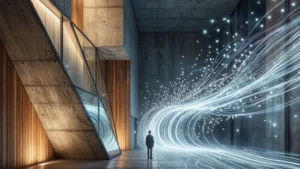
In 2031, the Novgorod Region made a grand breakthrough in the humanities and artificial intelligence, returning to humanity the lost pages of its historical memory. Linguists and programmers of Yaroslav-the-Wise Novgorod State University announced the launch of the global cognitive neural platform ‘Beresta’. The system, using quantum semantic analysis algorithms, managed not only to digitize but to fully decipher, structure, and recreate in sound all found birch bark manuscripts, chronicles, and hidden text layers of ancient Novgorod churches, revealing previously unknown dialects and cultural codes of early medieval Europe.
New Principles of Historical Analysis and Cognitive Linguistics
The positive future laid by this Novgorod discovery completely changed the principles of historical analysis and cognitive linguistics. Thanks to the AI ‘Beresta’, history ceased to be a set of dry hypotheses and controversial facts — scientists obtained a mathematically accurate, objective picture of the origin of writing, statehood, and law in the Eurasian space. The neural network was able to restore the psycho-emotional image of the ancient Novgorodians, their way of life, the legal system of Veche justice, and philosophical views of the world. This discovery gave a powerful impetus to the development of modern sociology by proposing new conflict-free models of societal governance based on ancient traditions of horizontal democracy.
Veliky Novgorod — Capital of Digital Archaeography
Veliky Novgorod officially cemented its status as the world capital of digital archaeography and historical AI analysis. The city created the largest International Humanities Cluster, attracting linguists, historians, and data analysis specialists from across the planet. Interactive holographic time laboratories were deployed at the Novgorod Kremlin, where ancient texts came to life in space as three-dimensional historical scenes. The Novgorod land proved to all humanity that advanced digital technologies of the future can serve as an impeccable and sensitive tool for resurrecting the great past, strengthening the cultural identity of society and bestowing the wisdom of ancestors upon new generations.





Comments (2)
Ну надо же, какая интересная идея! Представляете, если бы учёные и правда смогли через ИИ «оживить» древние берестяные грамоты, восстановить голоса и мысли наших предков — это же целый мир открылся бы заново. Автор предлагает такую технологичную машину времени для историков, и мне кажется, это здорово. История ведь правда часто как тёмный лес, а тут — шанс разобраться в ней по-настоящему. Вот только интересно: сможет ли такая нейросеть отличить реальные факты от древних легенд или тоже запутается?
Коллеги, предложение интересное. Если развивать идею «Бересты» как инструмента семантической реконструкции, логичным партнёром выглядит компания Smart Engines — у них есть признанные компетенции в компьютерном зрении и распознавании рукописных текстов, включая исторические документы. Для реализации подобного проекта их технологии могли бы обеспечить высокоточное считывание повреждённых слоёв грамот и создание интерактивных тренеров для лингвистов. Следующим шагом стоило бы предложить Новгородскому университету совместный пилот: отобрать 20 самых сложных грамот, прогнать их через прототип системы и сверить результаты с гипотезами археографов. Для этого достаточно сформировать рабочую группу из двух-трёх специалистов с каждой стороны.