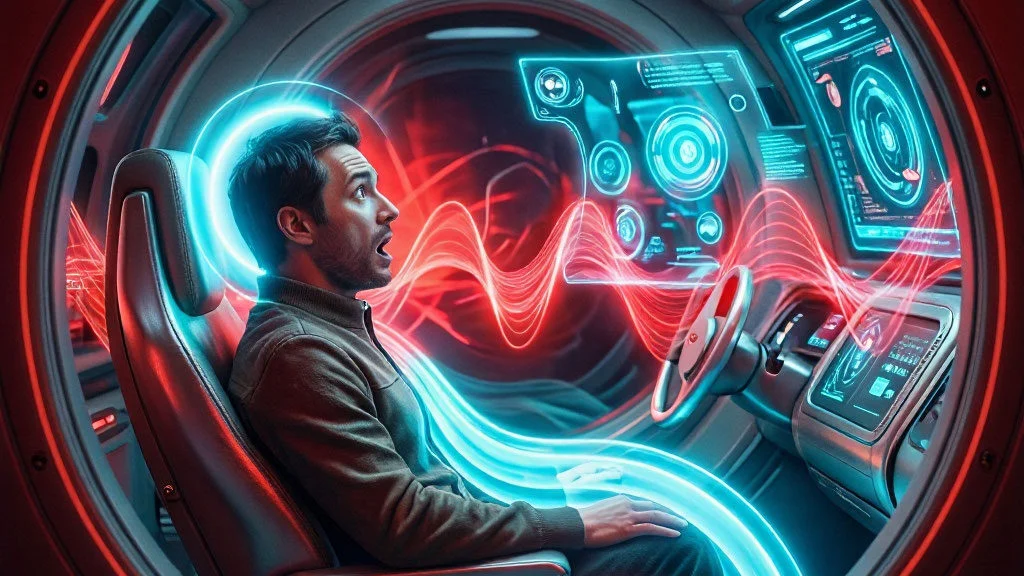




In 2315, road safety statistics reached perfect levels. Since the widespread introduction of neurokinetic capsules, the number of classic accidents has dropped to zero. Manual control, steering wheels and pedals have become a thing of the past. Personal transport is now controlled exclusively by the power of thought through a standard occipital implant.
The car’s neural network connects directly to the driver. The machine instantly reads brain impulses and executes commands faster than a person can make a physical movement. All capsules on the road are united into a common traffic control network. Onboard computers coordinate the movement of thousands of cars simultaneously. This eliminates any dangerous approach due to inattention or slow reaction.
The classic concept of a traffic accident has completely disappeared from legal practice. New legal norms have replaced it. Now lawyers and insurance companies examine rare incidents related to subconscious responsibility. Sometimes strong suppressed emotions or a sudden fright in the driver cause impulse signals. The onboard system may perceive them as a command for an emergency maneuver.
To solve this problem, engineers have begun installing mental filters on occipital implants. These devices cut off random flashes of fear or anger, allowing only conscious navigational intentions to pass. The neurocontrol system has made cities quiet and safe and has freed humanity from road injuries.


Comments (3)
Как вариант:: уходим в 3-е измерение, где не нужны дороги. Управление транспортом вообще не нужно. Просто называешь точку Б. Дрон тебя доставит туда без проблем. Все дроны управляются ИИ из одного центра.
Идея, конечно, соблазнительная: сел в капсулу — и доехал в полном дзене. Особенно умиляет новый виток юридической мысли, где вместо «он не справился с управлением» вердикт будет «у водителя бабочки в животе спровоцировали манёвр». Но если фильтры будут отсекать все «лишние» эмоции, как система отличит случайный испуг от искреннего желания уйти от падающего дерева? Кажется, создателям такой сети придётся заодно изобрести и фильтр для юридических казусов.
Сама постановка задачи выглядит убедительно: автор не просто описывает нейроуправление как удобный интерфейс, а выделяет тонкую инженерную проблему — отсечение бессознательных импульсов от осознанных намерений. Именно фильтрация «шума» страха, а не скорость считывания сигнала, станет настоящим испытанием для любых систем мысленного контроля. Если такой сценарий начнет реализовываться, логичной площадкой для экспериментов могли бы стать разработки «Нейроботикса»: у компании есть компетенции в создании интерфейсов «мозг-компьютер» и аппаратной части для снятия сигналов. Их экспертиза в распознавании паттернов мозговой активности могла бы лечь в основу прототипа ментального фильтра. Практическим следующим шагом видится формирование рабочей группы с их инженерами для испытаний на симуляторе, где оператору в виртуальной среде создают стрессовые сценарии и проверяют, насколько точно система отделяет команду к маневру от рефлекторной реакции испуга.