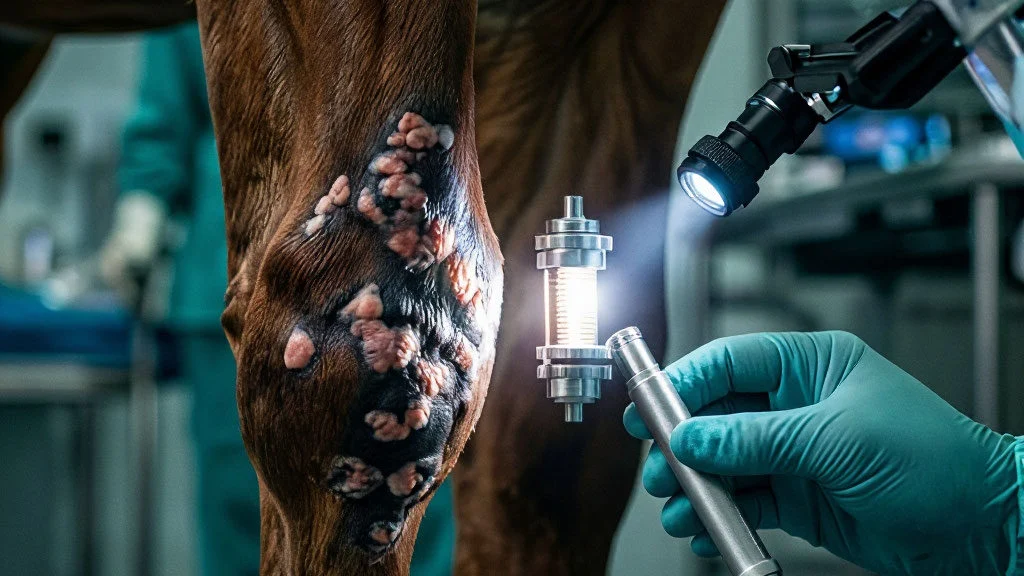

Attenuating pathogens through physical action marks a shift from chemical toxicology to the physical destruction of pathogens. In 2025 veterinary medicine, cold atmospheric plasma (CAP) and Far-UVC (pulsed ultraviolet C) technologies are becoming key tools for biosecurity. They make it possible to destroy any form of life, including fungal spores and resistant viruses, without damaging the animal’s own tissues and without leaving chemical residues.
Cold Atmospheric Plasma (CAP) in Surgery and Dermatology
Cold plasma is a partially ionized gas whose temperature is close to room temperature (20 to 40 °C), yet it is saturated with reactive oxygen and nitrogen species, electrons and ultraviolet radiation.
Applications in veterinary medicine:
- Treatment of dermatophytosis (ringworm): This is one of the most successful areas. Treating wounds and the skin of horses or cats with plasma aerosol completely destroys the spores of Trichophyton and Microsporum fungi. Plasma penetrates deep into the hair follicle, where traditional ointments cannot reach.
- Sterilization of surgical instruments: Plasma jets effectively disinfect complex-shaped metal instruments, destroying prions and biofilms that survive standard autoclaving.
- Activating healing: Unlike antibiotics, plasma not only kills bacteria but also stimulates fibroblasts. Microdoses of nitric oxide and hydrogen peroxide dilate blood vessels and attract immune cells, accelerating regeneration of the wound edges.
Far-UVC (207–222 nm): Sterilizing Air and Surfaces
Ultraviolet C in the 222 nm range (emitted by krypton-chloride excimer lamps) is a breakthrough in biosecurity.
The physics of safety:
The Far-UVC wavelength is absorbed by the dead layer of the epidermis (stratum corneum) of humans and animals, as well as by proteins in mucous membranes. The radiation does not penetrate deeper than 200–300 microns, so it does not cause mutations in the DNA of living cells and does not cause cataracts. However, for bacteria and viruses, which are microscopic in size, this light is lethal: it destroys their RNA/DNA and protein coats.
Applications in epizootic control:
- Poultry houses and pig farms: In 2025, the agency Texas A&M AgriLife launched a program to test Far-UVC against avian influenza viruses (H5N1, H9N2) directly in poultry houses. Lamps installed under the ceiling operate continuously, destroying aerosol droplets carrying the virus in the air, while birds and staff can remain indoors without harm to their health.
- Veterinary clinics: Continuous operation of Far-UVC lamps in surgical units and inpatient wards reduces the risk of nosocomial (hospital-acquired) infections such as MRSA (Staphylococcus aureus) or panleukopenia, without requiring staff to evacuate during UV disinfection.
Advantages over Chemicals
- No resistance: Physically destroying membranes and nucleic acids prevents microorganisms from developing defenses. Bacteria cannot «get used to» sunlight or plasma.
- Environmental friendliness: Abandoning glutaraldehyde, phenol and chlorine-containing solutions eliminates toxic effects on animals’ liver and kidneys, as well as contamination of farm wastewater.
- Biofilm control: Plasma and Far-UVC are the only means capable of effectively destroying dense biofilms on catheters and implants, where antibiotics are powerless.
The main obstacle to mass adoption remains the high cost of medical-grade plasma generators and the need for strict control of radiation dose to avoid locally overdrying mucous membranes during prolonged exposure. However, for high-value animals (for example, breeding stallions or cats with rare genetic diseases), these technologies are already becoming the standard of care.








Comments (1)
Сильная сторона замысла в том, что отказ от химии снимает резистентность и остатки в продукции. Практическая доработка: стартовать не с промышленного птичника, а с изолятора, где можно измерить дозу и скорость инактивации аэрозоля и проверить, не пересушивает ли Far-UVC слизистые у птицы. Пилот логично предложить «Черкизово»: свои птицефабрики, ветслужба и данные по вспышкам дают площадку, кадры и обратную связь. Первый шаг — собрать рабочую группу с их ветслужбой и производителем ламп и согласовать протокол на 3–6 месяцев с микробиологическим контролем воздуха.