



Answer: circumstances emerged in which resistance became unprofitable, while consent became profitable.
What society offered the elites:
— “Golden parachute”: lifelong rent, indexed and guaranteed, instead of the risk of losing everything.
— Not expropriation, but buyout
· Status of mentors: honor, respect, participation in scientific and cultural councils — something that for many turned out to be more important than money.
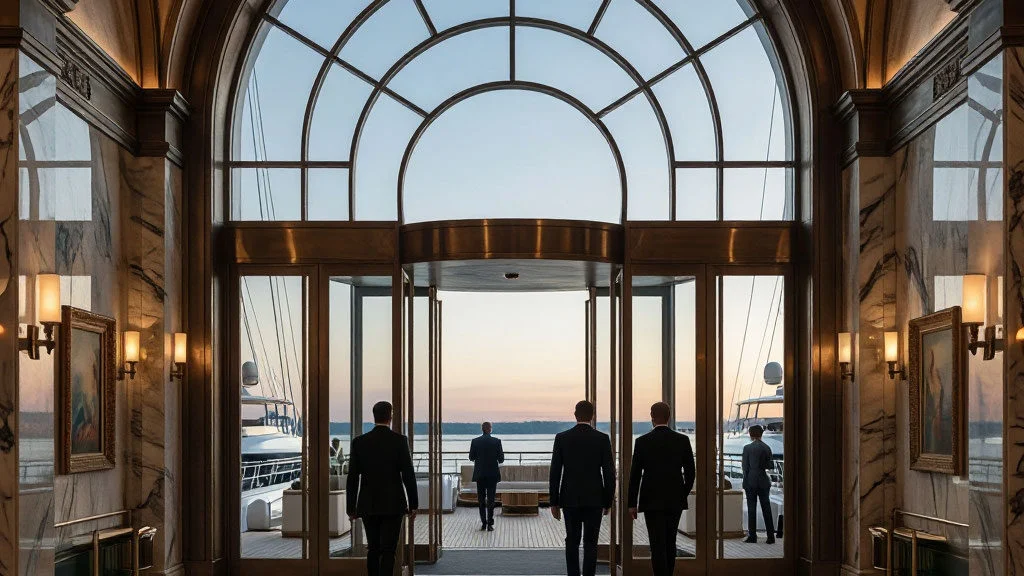
· Preservation of the luxury sector: yachts, art, design — please, but without access to the levers of resource management.
· Security guarantee — no trials, no persecution for the past, if assets are transferred voluntarily.
· Right to vote in new institutions — but not decisive, consultative.
Why it worked:
· Human nature: elites are not suicidal. The risk of losing everything for the illusory hope of retaining power proved incommensurate with guaranteed comfort.
· Transparency: satellite monitoring and a digital registry made concealment of assets impossible. Playing hide-and-seek became pointless.
· AI arbiter: any attempts at sabotage were recorded automatically. Resistance became not merely dangerous — it became meaningless.
· Public opinion: the moral values retained by many representatives of the elites pushed them toward change for the common good. To be an outcast in a world where everyone sees your motives is unbearable.
· Gradualism: the changes stretched over 60 years. Each generation of elites benefited and had no single point for organizing a coup.
The elites weighed it. On one side — risks: the status of outcasts, lawsuits by public-interest lawyers, life under siege. On the other — a “golden parachute” and guarantees. Human nature does not like risks. It loves safety, predictability, and honor.
The elites bought stability at the cost of a small share of income — this turned out to be cheaper than building bunkers, hiring security, and being in the blinding light of oversight by AI arbiters.
The main thing: no one took away private property. It was preserved. But it became transparent and lost the ability to control the lives of others through artificial scarcity.
At the first stage, elites adapted to transparency; at the second, to trusts. They were left with comfort, status, and even luxury business. Land became a common home, not an asset for resale. Real estate speculation died along with parasitic rent.
Thus the transition went smoothly. Not because the elites became saints, but because they were offered a choice: to become the first passengers of the ark or museum exhibits and outcasts of history. The elites chose the ark and Noonomy!

Comments (1)
Сильное в замысле — отказ от конфискации: выкуп и «золотой парашют» действительно снижают цену сопротивления элит. Но узкое место — не мораль, а инфраструктура доверия: реестр, мониторинг и ИИ-арбитр должны быть проверяемы извне, иначе это просто смена контролёра. Пилот можно предложить Сберу: его ИИ-платформа, облако и опыт цифровых реестров дали бы базу для прозрачного учёта земли в одном регионе. Первый шаг — рабочая группа со Сбером и Росреестром и обкатка автоконтроля на одном регионе.