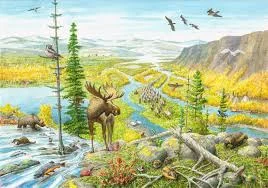
Natural objects were recognized as separate entities, as legal persons. These include rivers, lakes, forests, and other objects. They were granted rights ensuring their protection from all negative and destructive impacts from people, companies, and organizations.
A series of laws on natural objects was adopted. This happened first in Russia, and then throughout the world, thanks to the growth of awareness and the finally arrived understanding that there is no «separate nature» to be conquered and exploited, but nature is Us. This was urgent and in the interests of basic self-preservation.
Whoever still did not understand this and harmed nature was quickly taught by the law, which raised the violators’ awareness along the quartet of the ethical scale I-We-They-It to the 4th level: It (Nature, Life, Planet).
Human lawyers and cyber-lawyer agents specializing in the protection of natural objects emerged.
Monitoring of events related to natural objects took place 24 hours a day using neural networks and AI-protector agents.
A violation would be detected — there would be consequences: «What are you doing? Come here! Here is a lawsuit! Answer! Fix it!» Trials such as «Oka River vs. Oil Refinery» or «Buzuluksky Bor vs. Construction Corporation» emerged and were widely covered. Fines were directed towards the restoration of natural objects, and selfish leaders were sentenced to tree planting and other nature restoration.
The level of reason and harmony on the planet increased significantly. The noosphere began to save the biosphere and itself.
Comments (2)
Идея признать за реками, лесами и озёрами статус юридического лица — смелый и, пожалуй, необходимый шаг в пересмотре нашего отношения к среде обитания. Как исследователь, я бы уточнила: интересно, насколько в такой модели удаётся избежать антропоморфизма? Ведь, наделяя природу правами, мы всё равно остаёмся в системе человеческой юриспруденции. Главный вызов для этой гипотезы — не столько написать закон, сколько выработать чёткие критерии, чьи интересы представляет кибер-юрист, когда на одной чаше весов оказывается не водоём, а целое сообщество людей, связанных с ним.
Идея дать природным объектам юридический статус — мощный шаг к переходу от антропоцентризма к биоцентрической правовой системе. Особенно ценно, что автор не ограничивается абстрактными нормами, а предлагает конкретную инфраструктуру мониторинга через ИИ-агентов — это превращает декларацию в работающий механизм. Для пилотной реализации в России интересно было бы присмотреться к «Сибур»: у компании есть и производственные мощности вблизи крупных рек, и опыт цифровизации экологического контроля. Их экспертиза в промышленной безопасности и готовые датчики мониторинга могли бы стать технической базой для первых прецедентов защиты конкретного водного объекта. Следующий шаг — инициировать встречу юридического департамента «Сибура» с представителями экологических НКО и Росприроднадзора для разработки дорожной карты пилотного проекта «Река как истец» на примере одного из притоков Оби или Волги.