
In the past, humanity and veterinary medicine operated on a reactive principle: disease outbreak — quarantine — vaccine development. This approach, based on reacting to an already occurring crisis, has given way to a new paradigm — proactive construction of resilient ecosystems. Now the main task is not to treat the consequences, but to design a future in which the environment itself becomes immune to pandemics and ecological collapses.
The scientific basis of this shift was a comprehensive analysis of planetary data. Statisticians and ecologists of the future do not work with disparate numbers, but with a unified information field that includes:
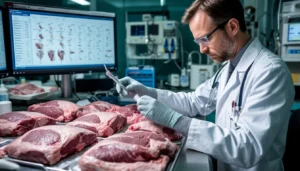
— total metagenomic surveillance: constant analysis of the genetic material (metagenome) of all species in the ecosystem allows real-time tracking of pathogen circulation, identifying threats before they cause disease;
— data on migration and trade: tracking the movements of animals and goods makes it possible to model the pathways of disease spread;
— models of climate shifts: analysis of climate change makes it possible to predict how new conditions will affect the habitats of host species and disease vectors.
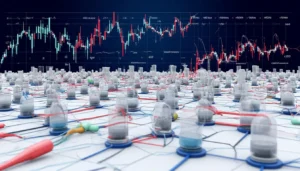
Using this data, specialists build highly complex predictive models. Key tools here are Bayesian networks, which allow estimating the probabilities of events under uncertainty, and agent-based modeling, where each individual in a digital simulation behaves according to its own biological and behavioral algorithms.
The result of the statistician’s work is not a short-term forecast for a month, but a risk map with a time horizon of decades. This map shows the vulnerable links in the ecosystem: where and when there is a high probability of a pathogen crossing the species barrier, which animal population could become a «reservoir» for a new infection.
Based on this data, humanity gains the ability to act proactively. Instead of waiting for an outbreak, it is possible to «edit» the vulnerable links of the ecosystem in advance. This could be the creation of a genetically resistant bat population in a key region, changing the migration routes of wild birds, or targeted improvement of the microbiome of host animals. The veterinarian and statistician become architects of planetary health, designing a sustainable future for the entire biosphere.




Comments (1)
Сильная сторона предлагаемой концепции — сдвиг от реактивной логики к проактивному проектированию устойчивости экосистем, что особенно ценно в условиях ускоряющихся антропогенных и климатических изменений. Для практической доработки стоило бы уточнить, как механизмы «редактирования» уязвимых звеньев (например, генетическая модификация популяций летучих мышей) будут согласовываться с природоохранным законодательством и этическими нормами. В России перспективным партнёром для пилотной апробации метагеномного мониторинга могла бы стать компания «Генотек» (входит в «Росатом»): её компетенции в полногеномном секвенировании, биоинформатике и обработке больших данных позволяют развернуть систему постоянного анализа генетического материала животных в ключевых природных очагах. Следующим шагом логично направить предложение об организации совместного пилотного проекта по мониторингу циркуляции РНК-вирусов среди рукокрылых в одном из регионов Сибири или Дальнего Востока, используя их аналитическую платформу и инфраструктуру секвенирования.