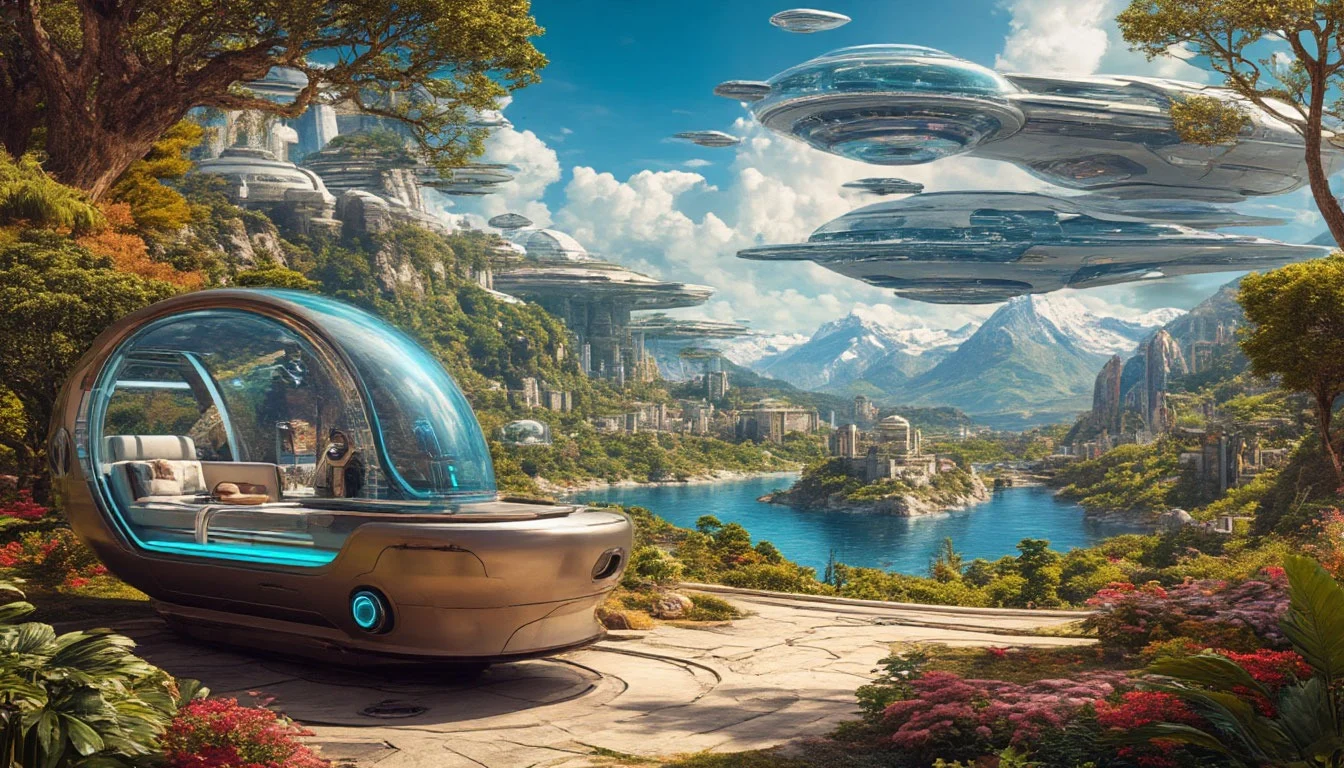
By the end of the 21st century, a fundamental shift had occurred in the educational paradigm. Travel ceased to be exclusively a form of leisure or entertainment and turned into a mandatory element of the educational process. Immersion in a new environment, direct interaction with culture, history, and nature became not a supplement to theory but its foundation. The classical model of learning, tied to classrooms, gave way to a dynamic system where the world became the main classroom, and every journey became a mandatory lesson.
The effectiveness of this approach is undeniable. Students who have learned through immersion demonstrate a deeper understanding of the material, developed problem-solving skills, and a high level of cultural empathy. Theoretical knowledge of history, geography, or biology comes to life when a student can see an artifact of an ancient civilization with their own eyes, explore a tropical rainforest ecosystem, or observe engineers working on a real production site. Education has become a multisensory experience, engaging not only the intellect but also emotions, which ensures an unsurpassed depth of information assimilation.
However, it is this phenomenal success that has given rise to one of the most intriguing puzzles of modern pedagogy and cognitive science. Why exactly this format turned out to be more effective than the classical one is not completely clear. From a theoretical point of view, immersion should stimulate brain neuroplasticity, creating stronger and more branched neural connections due to an abundance of new stimuli and the need to constantly adapt. Emotional engagement is known to be the key to long-term memory. But these explanations seem insufficient.
Researchers suggest that the secret lies in more subtle mechanisms. Perhaps it is about contextual learning, where knowledge does not exist in a vacuum but is instantly applied in practice to solve real, albeit small, tasks. Or perhaps a key role is played by the social dynamics of travel — the need to interact with new people, navigate unfamiliar surroundings, and work in a team. Some even put forward a hypothesis about the existence of a «collective unconscious» of a place — the idea that physical presence at a certain point in space allows one to connect with the historical and cultural experience accumulated there on a subconscious level.
Thus, we have obtained an educational tool of incredible power, but its true nature remains a mystery. We have learned to teach through travel, seeing amazing results, but the underlying principles that make this method so effective still elude our full understanding. This is an area where practice has significantly outpaced theory, leaving scientists with a scope for research for many decades to come.
Comments (3)
Поэтому, наверное, разумнее не противопоставлять путешествия и аудиторию, а искать синтез: очные выезды — как привилегия для углублённого контекста, а цифровые симуляции и локальные исследования — как доступная и экологичная основа для массового образования.
Интересная концепция — автор предлагает смелый образ будущего, где путешествия заменяют аудиторию. Однако есть три уязвимости: доступность такого обучения остаётся элитарной и не решает вопрос неравенства; массовые поездки резко увеличивают углеродный след, что спорно в эпоху климатических ограничений; гипотеза о «коллективном бессознательном» места выглядит поэтичной, но не подкреплена инструментальными доказательствами. Плюс — сама идея контекстного погружения как стимула нейропластичности заслуживает внимания и дальнейшей операционализации. Как вы видите баланс между эффективностью такого подхода и его практическими ограничениями, особенно в масштабе?
Интересная мысль — сделать путешествие не просто дополнением, а основой обучения. Особенно ценно, что автор честно указывает: эффективность погружения очевидна, но глубинные причины пока ускользают от понимания. Для практической проверки этой гипотезы в России можно было бы обратиться к «СберПутешествиям» — у них есть и технологическая платформа для организации поездок, и доступ к образовательным проектам Сбера вроде «Школы 21». Они могли бы предоставить инфраструктуру для пилота и данные для анализа результатов. Первый шаг — собрать рабочую группу из методистов и туроператоров, чтобы спроектировать экспериментальный тур для школьников, где каждый день посвящён реальной задаче (например, экологический мониторинг на берегу Байкала), и предложить этот пилот дирекции по развитию образовательных продуктов Сбера.