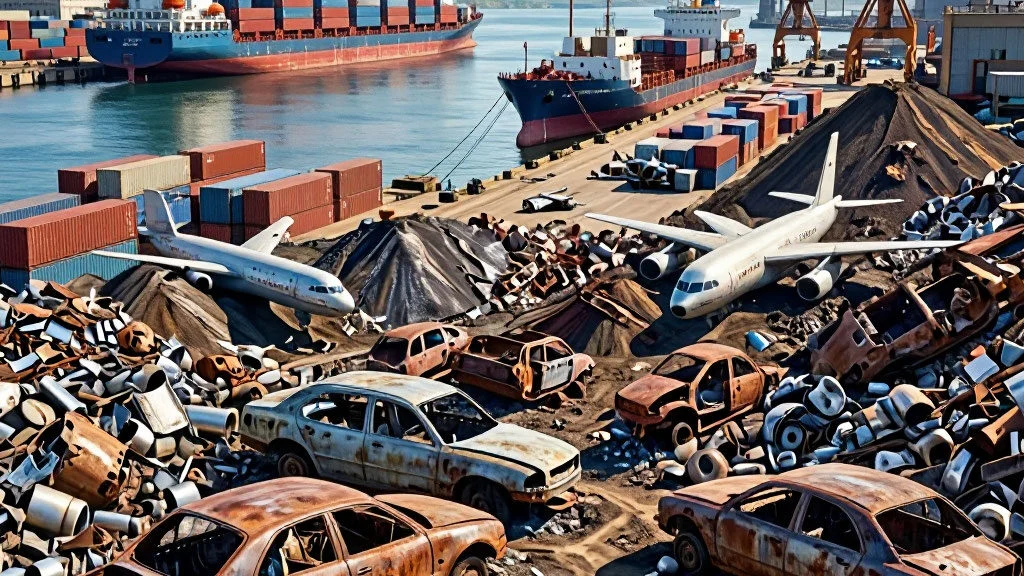




What if I told you that the future of mining is not underground, but in ordinary and industrial landfills, car scrapyards, and waste reception or transfer ports?
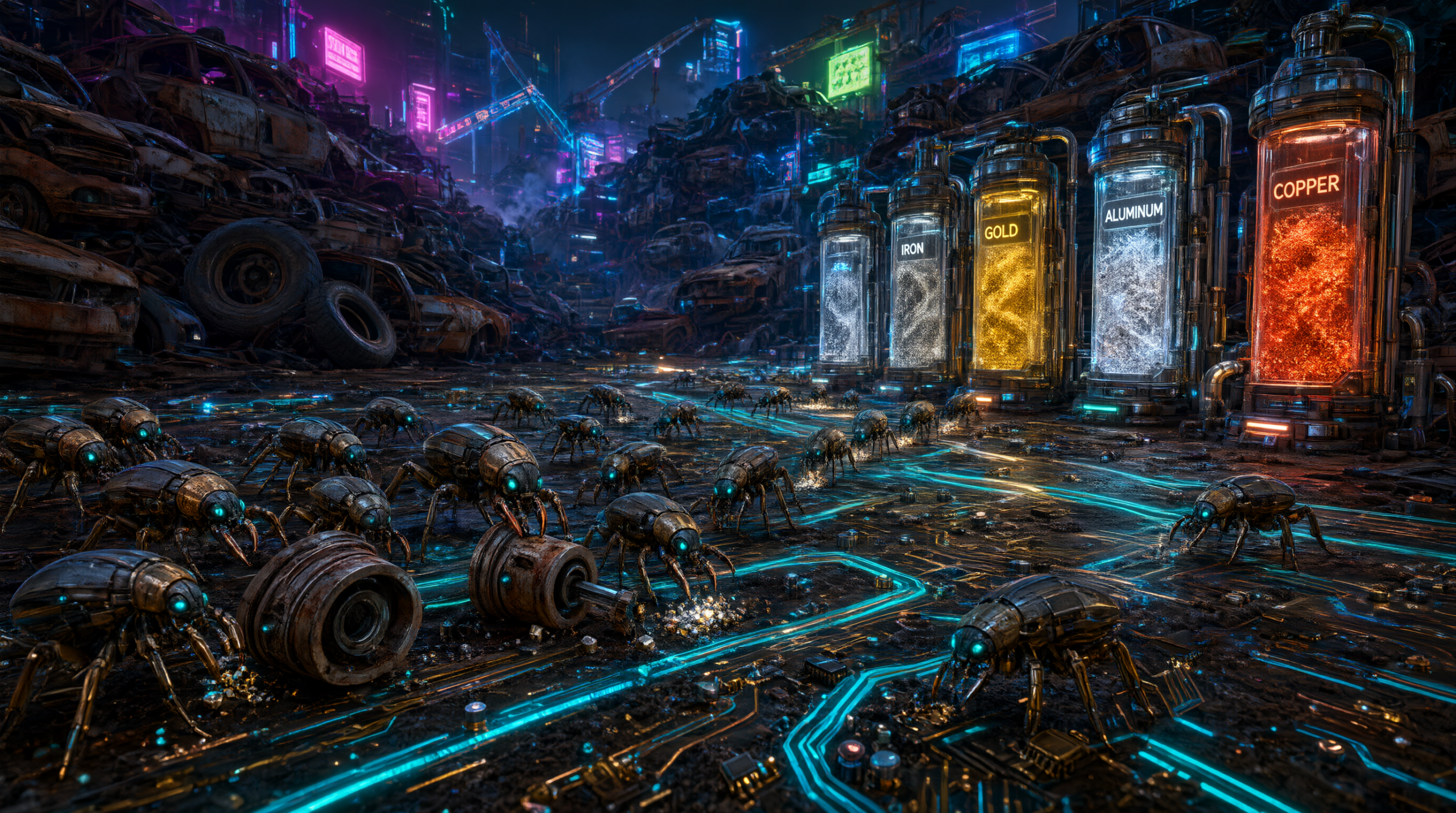
Look at this image. At first glance it looks like a futuristic landfill, but it is actually a high-tech refinery. Over the next 30 to 50 years, the way we recycle different substances will change forever.
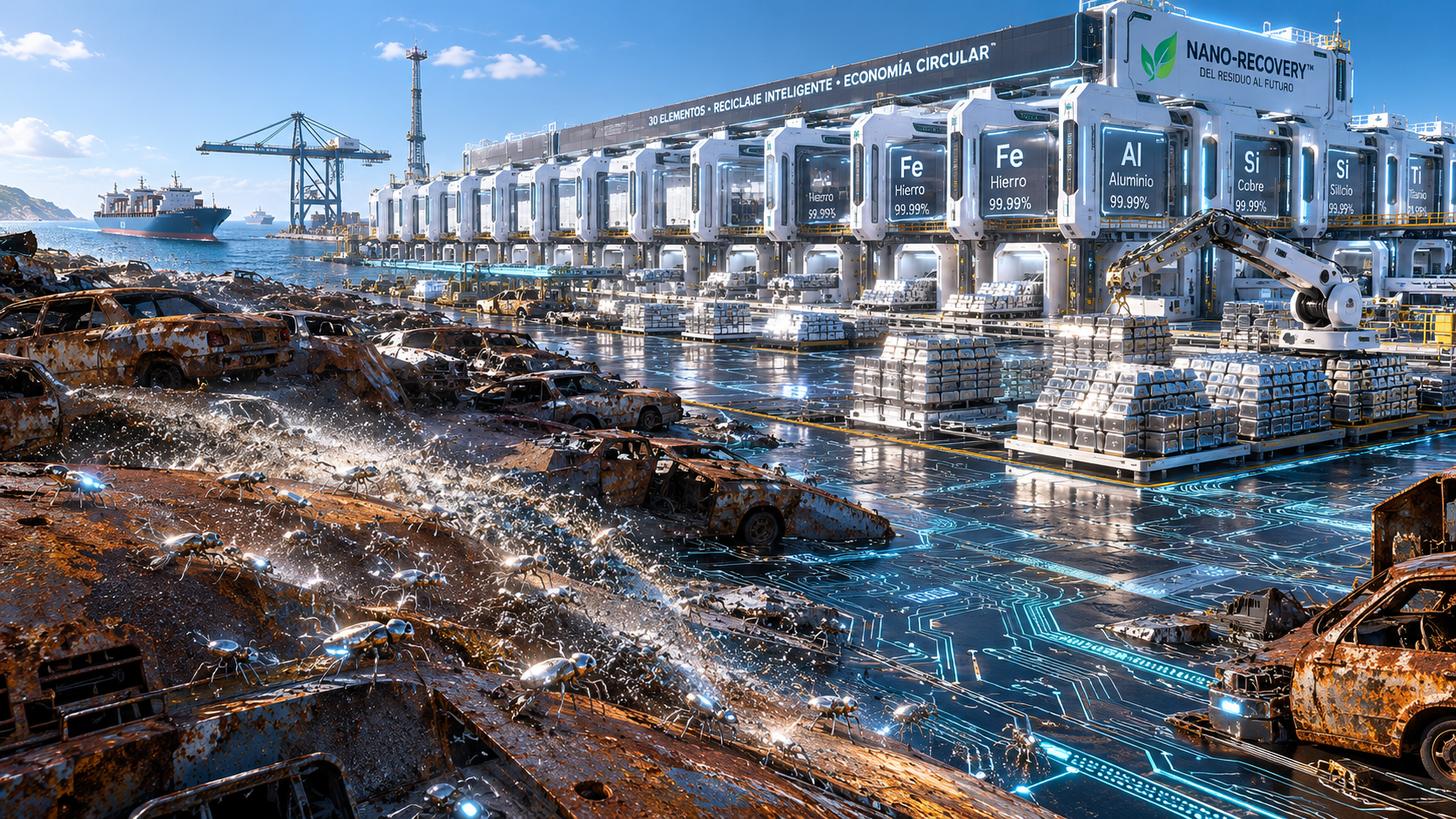
Imagine a giant scrapyard covered by an electronic «carpet.» On top of it, mountains of electronic, metal, and chemical waste. Scrapyards of rusted cars, ship and aircraft graveyards, or simply ports where gigantic vessels unload containers of waste from major technology industries. But there are no giant cranes or polluting furnaces. Instead, a swarm of nano-insects (nanobots) moves like a mist of silver light.
What exactly do these nanobots do?
· They access the material: They crawl across the electronic floor and attack the scrap, breaking it down atomically. They destroy bonds, form new ones, or rehabilitate matter to bring the substance to its purest and most efficient state. It is regenerating metal at the molecular level.
· They sort the matter: They carry the purified particles to the sorting containers. On the left, a row of containers, each storing an element: Iron (Fe), Gold (Au), Aluminum (Al), etc.
Many metals, due to the overwhelming quantity, are already woven into perfect, shiny ingots stacked with surgical precision, ready to go directly to the factory. In turn, the ships that keep arriving with more waste will carry the valuable cargo back on their return.
The air is clean, the sky is blue, and the sea shows no trace of pollution. What today is a graveyard of toxic scrap will in 30 years be the cleanest and most productive open-pit mine on the planet. Waste will no longer be a problem; it will be the most valuable resource.
And my question is: Will this technology be limited to Earth, or is space mining where it will demonstrate its true potential?





Comments (2)
El ♻️ se vuelve con el tiempo un pilar crucial en el desarrollo de la humanidad con vista hacia un futuro positivo
Если доводить идею до пилота, её сильная сторона — не «умная пыль», а молекулярная селективность, снимающая низкую чистоту вторичных металлов. В России проверять это логично с «Норникелем»: его НТЦ и переработка техногенных отходов дают реальные шламы, металлургическую экспертизу и площадку. Предложил бы не концепт, а пилот на одном потоке шлама: сравнить селективность, энергобаланс и выход металлов с текущей схемой, собрав рабочую группу из технологов и профильной кафедры.