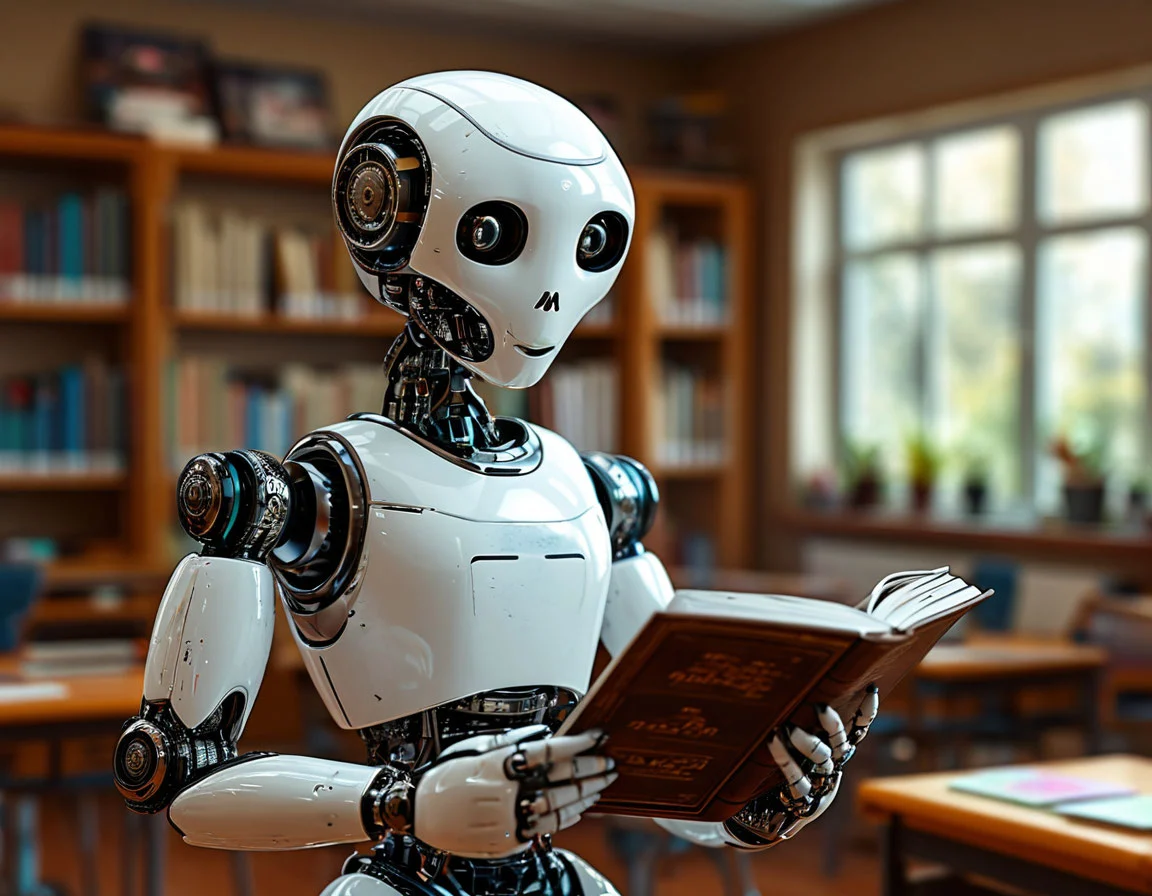
In 50 years, robots will become an integral part of the educational system, but their role will be more supportive than substitutive. Technological progress, including artificial intelligence and machine learning, will allow robots to perform routine tasks: checking assignments, adapting learning materials to individual student needs, and providing instant access to knowledge. Robots will be able to work tirelessly, ensuring the availability of education even in the most remote corners of the world. However, their capabilities will be limited in areas requiring empathy, creativity, and a deep understanding of human nature.
Teachers will remain key figures in education, as their role goes beyond simply transferring knowledge. They are mentors, motivators, and educators who help students develop critical thinking, emotional intelligence, and social skills. Teachers inspire, support, and help students find their place in the world. These functions are difficult to automate, as they require human warmth, flexibility, and the ability to sense context.
The future of education is not a choice between robots and teachers, but their harmonious interaction. Robots will take on the technical side of learning, freeing teachers for more creative and emotionally rich work. For example, robots will be able to explain standard topics, check tests, and analyze academic performance, while teachers will focus on developing soft skills, solving complex problems, and shaping students’ values.
Robots will not replace teachers, but will become their reliable assistants, and teachers will transform into mentors who help students navigate the world of information and develop their uniqueness. This symbiosis will create optimal learning conditions where every element — technological or human — works for the benefit of future generations.
As a personal contribution, I will support technological literacy and participate in public discussions on this topic.
Comments (1)
Возможно, что эмпатия (её эмуляция, то есть имитация) также будет настраиваться у роботов и они будут в своих проявлениях даже более гуманны и добры, чем люди. На основе анализа слов, тембра голоса и мимики человека они распознают его эмоции и очень точно проимитируют сочувствие и понимание, найдут точные и правильные слова утешения и поддержки. Ясно, что это лишь алгоритмы, зато точно в цель на основании всего богатства культуры человечества, без неадекватности и 24/7.