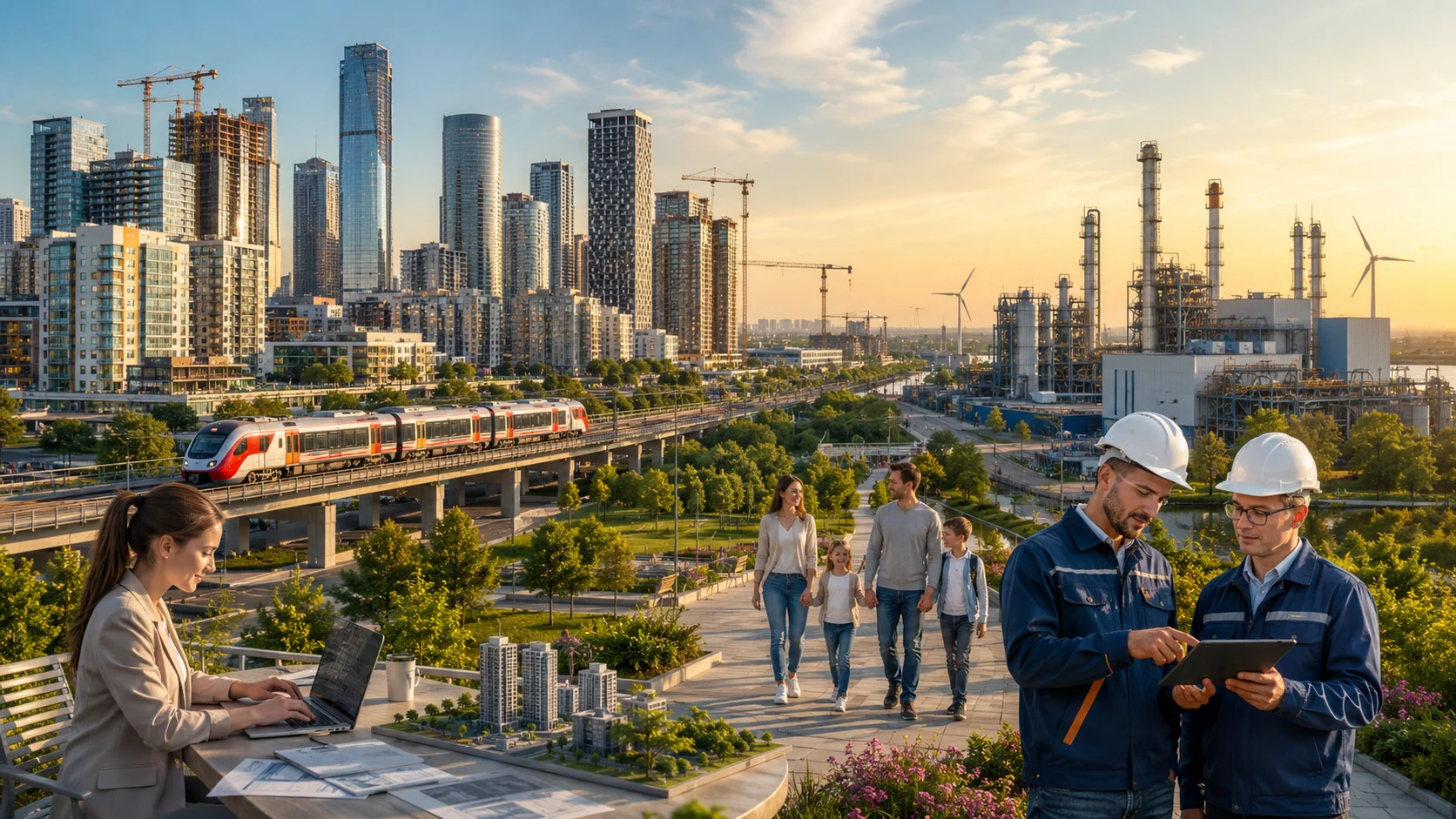
Growth becomes calm and long-term
Since 2027, Russia has embarked on a sustainable growth trajectory that has become noticeable not only in reports but also in everyday life. The economy grew more calmly, deeply, and qualitatively: enterprises upgraded equipment, regions launched long-term programs, banks financed clear projects, and people saw that development was no longer a short sprint. The main thing was not just an increase in numbers, but the country’s ability to maintain momentum even amid changes in the external environment.
This growth differed from previous cycles. It relied on domestic demand, technological renewal, employment, infrastructure, exports of complex solutions, and improved governance. New production facilities appeared in cities, services and jobs in small towns, project laboratories in universities, and mentorship programs in companies. The economy became more like a living network where the success of one region helped neighboring territories, and a strong industry pulled along education, transport, and housing.
The country develops through the projects of people and regions
The roadmap for sustainable growth included several sequential steps. First, investments were supported in production, transport, utilities infrastructure, and digital systems. Then the state and business began to more precisely select high-return projects: where jobs were created, productivity grew, and new competencies emerged. After that, regions gained more tools for independent development—from industrial parks to educational programs tailored to specific enterprises.
An ordinary person participated in growth through their qualifications, initiative, and willingness to create. They chose legal employment, learned to manage personal finances, participated in local projects, supported entrepreneurs, suggested ideas for improvement, opened clubs, workshops, services, and social initiatives. Growth became not only a matter of government and corporations but also the sum of decisions of millions of people who stopped waiting for change from outside.
«Futureating» helped make this trajectory visible. On the platform, people created postulates about new factories, educational centers, technology districts, tourism, transport, family businesses, and urban environments. Assessments showed which ideas had the greatest potential, and the contribution section turned a dream into action. Thus, sustainable growth became not a dry formula but a clear path that the country walked together with its citizens.
Comments (0)