


The education system of the future will undergo a fundamental transformation so that school does not turn into a «warehouse for children» and the younger generation does not become passive consumers of digital content. Today’s children are the «filter generation»: from the cradle they watch artificial intelligence produce digital masterpieces, texts and programs in a single click. These children have an innate immunity to direct propaganda and outdated broadcast methods; they do not take the printed word or a screen on faith. Yet behind this technological adaptation lurks a colossal risk: a brain accustomed to «fast dopamine» and to beautiful ready-made solutions from neural networks may completely lose the ability to think independently. The school of the future is called upon to resolve this crisis by completely changing the vector of learning.
The main task of the education system will be to forge a durable alloy of deep fundamental traditions and a hard, pragmatic reckoning with the challenges of our time. Education will abandon forever the mechanical cramming of facts, dates and formulas, since any reference information is a click away. Instead, the focus will shift to developing critical thinking and a methodology of knowledge. Teachers will teach children not to look for ready-made answers but to formulate the right questions and get to the essence of things, constantly asking: «Why?». School will become a space where mental flexibility, the ability to filter information noise and the analysis of complex cause-and-effect relationships are developed.
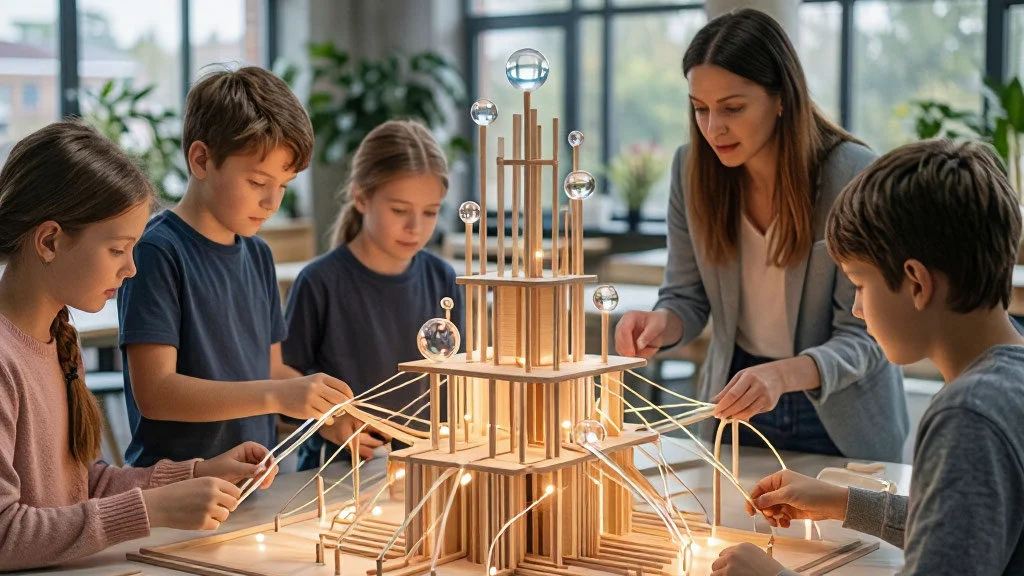
The ultimate goal of the renewed education is to raise creators, not consumers. The society of the future does not need users who merely know which button to press for a quick result. The world needs makers who understand the internal architecture of technologies, know how to create that button and — far more importantly — realize why it is needed and what ethical consequences pressing it will bring. The teacher of the future will turn from a transmitter of knowledge into a mentor and navigator who helps unlock the unique creative potential of every child, channeling their dopamine engagement toward creating a real, tangible product that is useful to society.



Comments (3)
Very interesting. Let's be friends. Our team is promoting the project "Unified Media Environment for Children and Youth of BRICS+ Countries in the Eco-Space of a Favorable Future"; one of the concrete stages of implementing the project is the construction in Sochi of the "Park of Intellectual Entertainment," where the Living Physics Theater can and should be created
Идея автора мне по душе: если школу развернуть к вопросам «почему» и живому поиску, а не к зубрёжке, дети правда начнут думать сами. Учитель-наставник вместо говорящей головы — это здорово. А как вы думаете, где взять столько таких педагогов?
Ставка на вопросы вместо готовых ответов — сильная сторона идеи: у детей, выросших с нейросетями, самостоятельность мышления действительно становится дефицитом. Практическая доработка — не декларации, а измеримые задания, где ИИ обязателен, но с разметкой, что сделал он, а что ученик. Пилот реально собрать с «Учи.ру»: у платформы есть охват школ и данные о типовых ошибках, по которым видно, где дети срезают путь. Первый шаг — письмо методистам сервиса с предложением на одном предмете в двух-трёх школах провести полугодовой эксперимент с такой разметкой и сравнить результаты.