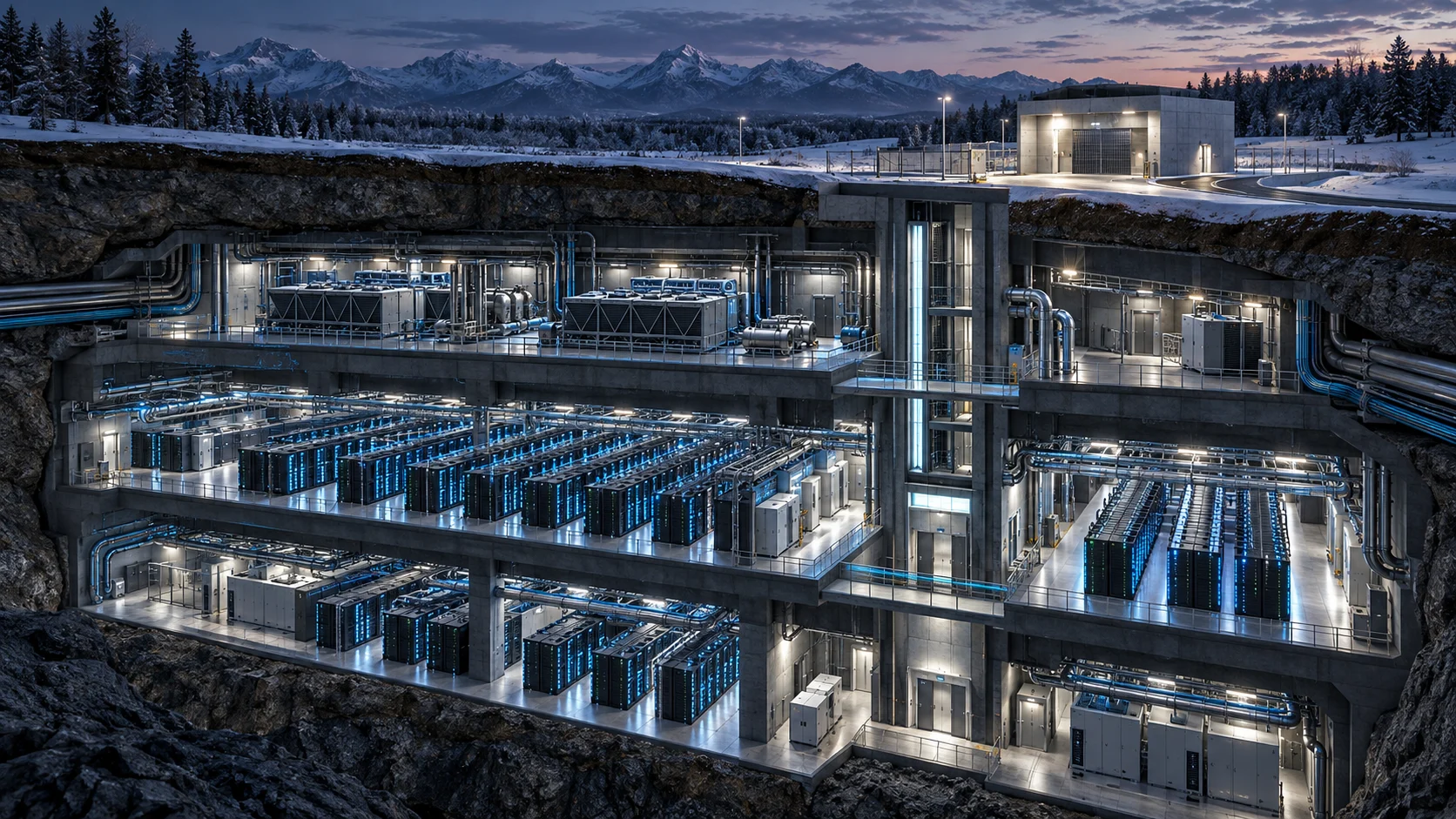




By 2038, a network of data centers located entirely underground appeared in Russia. Yandex, Sber, and other technology companies moved part of their computing capacity into specially built complexes: server rooms, engineering systems, and control centers were located below the surface. The main goal was the uninterrupted operation of digital services that people used every day.
Infrastructure that goes unnoticed
Bank payments, doctor’s appointments, government services, education, and cloud tools continued to work even when an individual center was undergoing maintenance. Load was automatically shifted to other sites. To the user, it looked simple: the app opened, the document was saved, and the payment went through regardless of where the servers were located.
Underground placement helped maintain more stable conditions for equipment and freed up surface areas. But depth itself did not guarantee reliability. It was ensured by independent power and communication lines, equipment redundancy, thoughtful cooling, and recovery testing.
The foundation for such a future already existed in 2026. For example, in Norway, Lefdal Mine Datacenter operated in a former mine, using cold fjord water for cooling. Yandex was expanding its cloud infrastructure. Thus the idea gained both an engineering basis and growing demand.
How underground complexes became the standard
First, specialists selected sites with suitable geology, available electricity, and several fiber-optic communication routes. Then they built pilot centers, comparing construction, cooling, and maintenance costs with above-ground data centers. After that, standard modules began to be built in different regions and combined into networks. The final step was common requirements for redundancy and regular business continuity checks.
Part of the heat generated by servers was used to heat nearby buildings where possible. Small entrance pavilions and necessary utilities remained on the surface. Underground, however, the digital foundation of cities was taking shape — inconspicuous, energy-efficient, and designed for decades of operation.
My contribution
In my own digital projects, I implemented backup, distributed important services across independent sites, and regularly tested recovery after failures. I also supported open discussion of energy-efficient data centers so that uninterrupted operation would become a mandatory requirement for Russia’s digital infrastructure.







Comments (2)
В развитие идеи подземных ЦОДов, я бы добавил организацию постоянной многоканальной связи со спутниковой группировкой ретрансляторов сверхскоростного Интернета на всю территорию России. Эти дублирующие каналы связи сделают объединённую инфосистему России поистине неуязвимой и абсолютно надёжной. Основа заложена: это спутники Рассвет от Бюро 1440. К 2028 году их будет уже около 400.
Идея подземных ЦОД сильнее всего там, где есть готовая инфраструктура. Если её развивать, предложил бы пилот с «Норильским никелем»: у компании есть подземные выработки, своя энергетика и опыт стройки в сложных условиях. Она может дать площадку, геологию, электроснабжение и кадры, а оператор ЦОД — охлаждение, резервирование и эксплуатацию. Первый шаг — рабочая группа с инженерами «Норникеля» и облачным провайдером, пре-ТЭО на одной отработанной выработке.