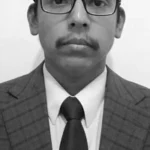
Ruben Gali is a Mexican cultural scientist and futurist specializing in strategic foresight and analysis of AI’s impact on Latin American culture. On the «Futureating» platform, he serves as an expert, fostering dialogue between regions and promoting the preservation of human identity in the age of automation.
— Ruben, how is today’s digital explosion and artificial intelligence transforming the «collective unconscious» of Latin America?
For most of the modern era, Latin America has occupied a peripheral position economically and culturally. Narratives about progress and identity were created elsewhere. However, today the digital revolution and AI are changing this dynamic. For the first time, millions of people in our region have tools not just to consume meanings, but to create them. Especially among young people, this is shaping an interconnected mindset open to experimentation.
At the same time, AI is beginning to define how societies think and understand reality itself. This opens up colossal opportunities, but carries the risks of algorithmic homogenization and information dependency. For me, the central question is civilizational: will technology push humanity toward cultural uniformity, or toward a genuine pluralism of civilizations capable of jointly designing different futures?
— What role does science fiction play in Latin American megacities, and is a new «image of the future» being born right on their streets?
Although my work often mentions Mexico City, I actually live in Monterrey, in northern Mexico. Mexico City feels like a labyrinth where ancient memory, colonial structures, and digital hypermodernity coexist simultaneously. Monterrey reflects another face of the region: industrial acceleration and technological pragmatism.
In this context, science fiction arises naturally, because everyday life itself resembles speculative prose. On our streets, you constantly encounter contradictions between technological acceleration and infrastructural fragility, between AI and inequality. What interests me most is that these megacities are beginning to generate their own images of the future. These are not mere copies of Silicon Valley utopias or Western dystopias, but more hybrid and humane visions shaped by historical memory and cultural resilience. In Latin America, science fiction is increasingly seen as a language for interpreting the present.
— How does science fiction work as a foresight tool, and does it help young people cope with anxiety about unpredictable progress?
In Latin America, science fiction is increasingly recognized as a tool for strategic imagination. In societies marked by instability, speculative narratives allow people to mentally explore possible futures before they arrive. This is especially important for the younger generation, as technological changes advance faster than the psychological structures capable of assimilating them.
Science fiction helps foster cognitive flexibility in the face of uncertainty. It encourages thinking in terms of multiple scenarios, becoming a form of cultural and psychological preparation. Our societies have historically developed strong adaptive abilities. People are accustomed to navigating instability, which becomes an advantage in an era where resilience and imagination are increasingly valued. The central question of Latin American thought is not simply what technologies will emerge, but what humanity we want to preserve as we enter these new realities.
— What alternative future scenarios do Latin American intellectuals offer in contrast to Western techno-dystopias, and what meanings does the region bring to the global dialogue?
We are witnessing a search for paths to the future that go beyond both the old promises of globalization and the dominant techno-dystopian narratives of the West. More and more thinkers in the region are exploring concepts where technology is not an end in itself, but a tool serving culture, community, and human dignity.
Latin America has historically learned to live with mixture, contradictions, and constant adaptation. Our region brings a deeply pluralistic perspective to the global dialogue. That is why many of our visions of the future depict not a homogeneous humanity, but a multipolar world where different civilizations can coexist without losing their identity. This is the contribution of projects like «Voices of Multipolarity» — creating spaces where the future can be imagined based on multiple historical experiences, rather than from a single dominant global narrative.
— How can science fiction literature and foresight methods be integrated into modern education to teach young people critical thinking?
Our era demands cognitive flexibility — the ability to adapt, reinterpret reality, and think beyond established models. In this context, science fiction can become a strategic educational tool. It allows young people to imagine possible futures, anticipate risks, and understand that technological change is not just a threat, but a sphere of human responsibility.
In Latin America, where uncertainty is part of everyday life, these methods help transform anxiety into strategic thinking. Instead of raising passive consumers of technology, we should shape individuals capable of asking ethical and civilizational questions about the future they want to build. Foresight and science fiction teach the main lesson: the future is not predetermined. It is shaped by the values, decisions, and visions that societies are willing to cultivate today.
— In which specific areas — literature, philosophy, or media — do you see the most vibrant points of convergence between Russia and Latin America?
The most fruitful points of convergence between Russia and Latin America arise precisely in those spheres where both cultures have historically been forced to think from the periphery of global power, facing crises and ongoing searches for identity. In literature, I see a shared sensitivity to great human questions: historical destiny and collective memory. From Dostoevsky to Borges, from Bulgakov to García Márquez, there is a common concern for exploring not only visible reality but also the symbolic and psychological dimensions of existence. Both traditions understand literature as a form of philosophical inquiry.
In philosophy, I see a growing convergence around the need to design alternative models of the future. Both Russia and Latin America have traditions that question cultural homogenization and technocratic reductionism. I am particularly interested in the dialogue about how societies can preserve human depth in the age of automation. In media studies, our societies face similar questions about cultural sovereignty amidst rapid technological change. Here, science fiction and futures research can become common languages. I see the possibility of building an intellectual dialogue along the South-East axis, capable of offering new visions for humanity’s future based on the experience of those who have learned to think in conditions of uncertainty.
— If you were to describe the ideal «Image of the Future» of humanity with one vivid metaphor or cultural symbol, what would you choose?
I would describe the ideal Image of the Future as a luminous bridge suspended between civilizations. A bridge — because humanity’s future cannot be built through isolation, fragmentation, or technological tribalism, but only through dialogue between cultures, disciplines, and historical experiences. Luminous — because knowledge alone is not enough. The future also requires awareness, ethical imagination, memory, and the ability to illuminate what remains human amidst accelerating technological change. And suspended between civilizations — because the 21st century will not belong to any single center of power or unified cultural narrative. It will belong to those who are capable of connecting worlds without erasing their differences.
You can read Ruben Gali’s speech at the «Open Dialogue» here.
Comments (1)
Интервью с Рубеном Гали интересно тем, что он чётко формулирует сдвиг: Латинская Америка больше не просто потребляет образы будущего с Запада, а начинает производить свои — более гибридные и человечные. Сильная мысль в том, что неопределённость, которую часто воспринимают как проблему, в регионе превратили в тренировку адаптивности и когнитивной гибкости. Польза разговора для читателя — смена оптики: вместо страха перед технологиями видишь инструмент для сохранения культурного многообразия и проектирования будущего под свои ценности, а не под чужой шаблон. В продолжение хотелось бы услышать, как эти идеи адаптации и многополярности можно применить именно в российской практике форсайта, которая тоже ищет баланс между технологическим рывком и сохранением идентичности.