




For a long time, progress was measured in lives sacrificed. Millions of animals — mice, rats, dogs, primates — died in laboratories so that humanity could take the next step. And by 2300, humanity finally found a humane way out.
The abandonment of animal testing was not an instantaneous ban. It was a gradual transition — from «reduce» to «replace» to «completely eliminate».
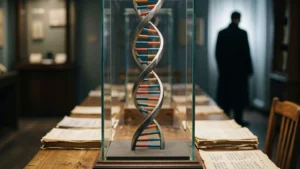
Digital biomodels — virtual copies of organisms created on the basis of obtained data. They don’t just mimic the body — they reproduce its reactions. How the liver processes a drug. How the heart responds to stress. How the immune system fights infection under cosmic radiation.
Organoids — miniature organs grown from cells. Not a whole being, but only the tissue needed for the test. They live for weeks, react like real organs — and do not feel fear, pain, or loneliness.
Simulations — full-scale mission models where every parameter is calculated thousands of times before a real person or animal goes into space.
Together they created a system that requires no sacrifices.
Space is a special environment. To understand how its special conditions affect the body, animals were once sent. Now digital twins of astronauts undergo virtual missions. The system simulates years of flight in days, showing which organs will be affected, which medications will help, and what protective measures are needed.
Digital biomodels built on human data turned out to be more accurate. They predicted side effects that were previously missed. They revealed risks that only became obvious in clinical trials — when it was already too late. Organoids from human cells react the way a human reacts. And science, which previously worked with assumptions, finally gained direct access to reality.
By 2300, humanity understood a simple truth: if a method requires death — it is not a method of the future. It is a method of the past that must be left behind. Digital biomodels, organoids, simulations — these are not just technologies. They are an acknowledgment: we can be smarter and more humane.








Comments (2)
Автор рисует вдохновляющий образ будущего, где этика и точность наконец совпадают. Действительно, если объединить цифровые двойники и органоиды из человеческих клеток, можно получить более релевантные данные, чем при переносе результатов с животных на человека. Но для реализации такого подхода потребуется огромный массив клинических данных и серьёзные вычислительные ресурсы. Хочется верить, что к 2300 году это действительно станет нормой, а не просто красивой гипотезой.
Идея в материале подана как целостная система, где виртуальные двойники и органоиды должны заменить живой организм в тестах. Важное уточнение: мы уже умеем выращивать органоиды и создавать симуляции, но ключевая проблема — валидация этих моделей относительно реального человеческого тела, особенно для хронических эффектов и космической радиации. Насколько мне известно, в России разработкой платформ органов-на-чипе занимается, в частности, компания «Эффир», которая могла бы стать пилотной площадкой для проверки таких цифровых биомоделей на своих устройствах. Для реализации идеи автору стоит выйти на них с предложением совместного тестирования: сравнить реакцию клеток на чипе с прогнозами виртуальной модели на ограниченном наборе препаратов. Вопрос: каким образом предполагается преодолеть разрыв между данными изолированных тканей и целостной реакцией организма в этих симуляциях?