{
«title»: «Automated statistical reporting without the human factor»,
«excerpt»: «»,
«content_html»: «
In the last century, working with data was akin to archaeological excavation. Statisticians spent up to 80% of their time not on finding patterns, but on “cleaning” — the tedious process of correcting input errors, reconciling contradictory paper reports, and filling gaps. Mistakes, “paper” protocols, and reporting delays were not the exception but the norm, an integral part of the profession. However, the technological revolution has completely eradicated this class of problems, changing the very essence of an analyst’s work.
The scientific underpinning of this transition is the creation of global blockchain registries of animal health, integrated with artificial intelligence systems. Now, every piece of information — from a primary diagnosis on a vet’s field tablet to a complex genomic passport and metabolic profile — is automatically recorded in a distributed ledger at the moment of its creation.
Verification at the generation stage plays a key role. Neural networks analyze incoming data in real time, cross-checking it against millions of similar cases and detecting anomalies or errors before a record ever reaches the blockchain. A cryptographically protected timestamp guarantees the immutability and reliability of the information. The system simply will not accept incorrect or falsified data.
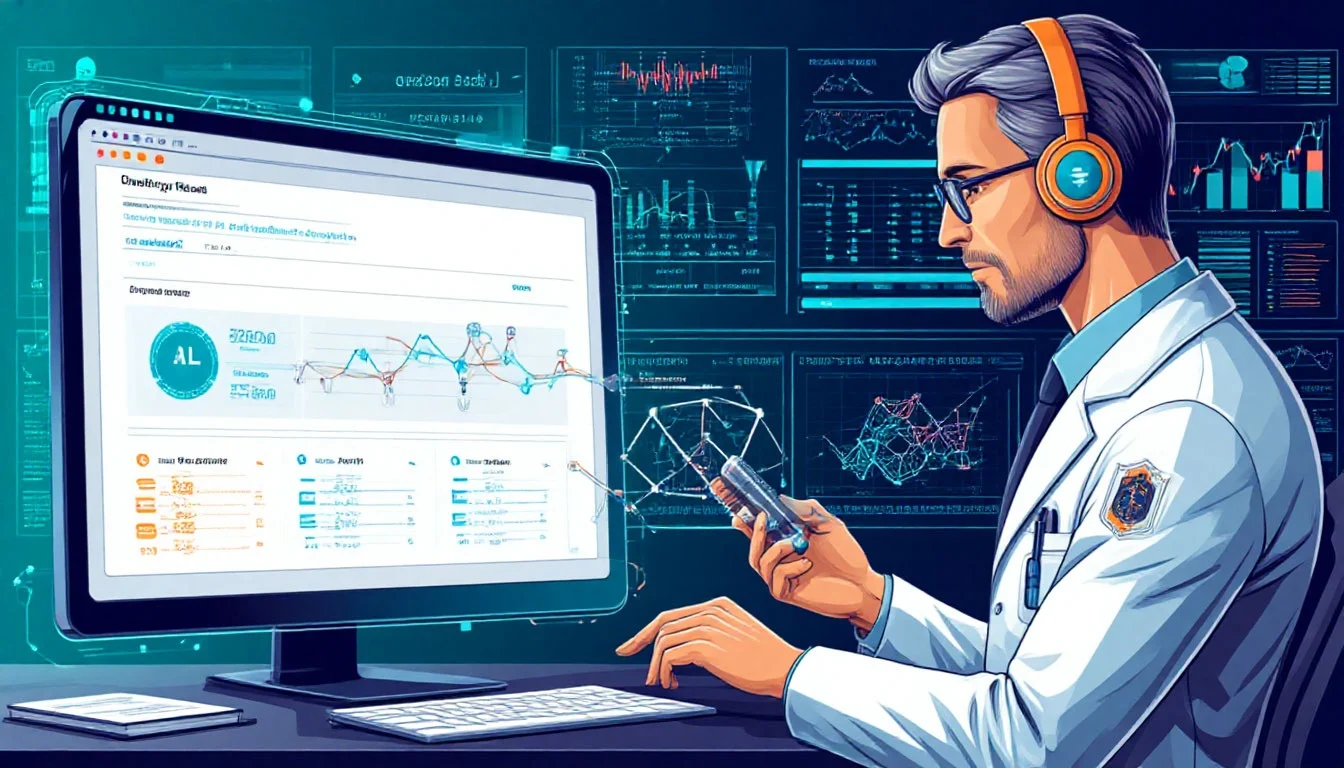
For a statistician, this meant a complete paradigm shift. The profession has shed the routine of data wrangling. Data arrives structured, verified, and ready for real-time analysis. The analyst’s role has shifted from “sanitation worker” to “architect.” Today, statisticians no longer spend time cleaning spreadsheets; instead, they focus on strategic modeling: building predictive models of pandemics, assessing the effectiveness of new vaccines on global data, and developing algorithms to optimize the entire healthcare system. They work not with the past but with the future, using a perfectly clean data foundation to make decisions on a planetary scale.
»
}



Comments (0)