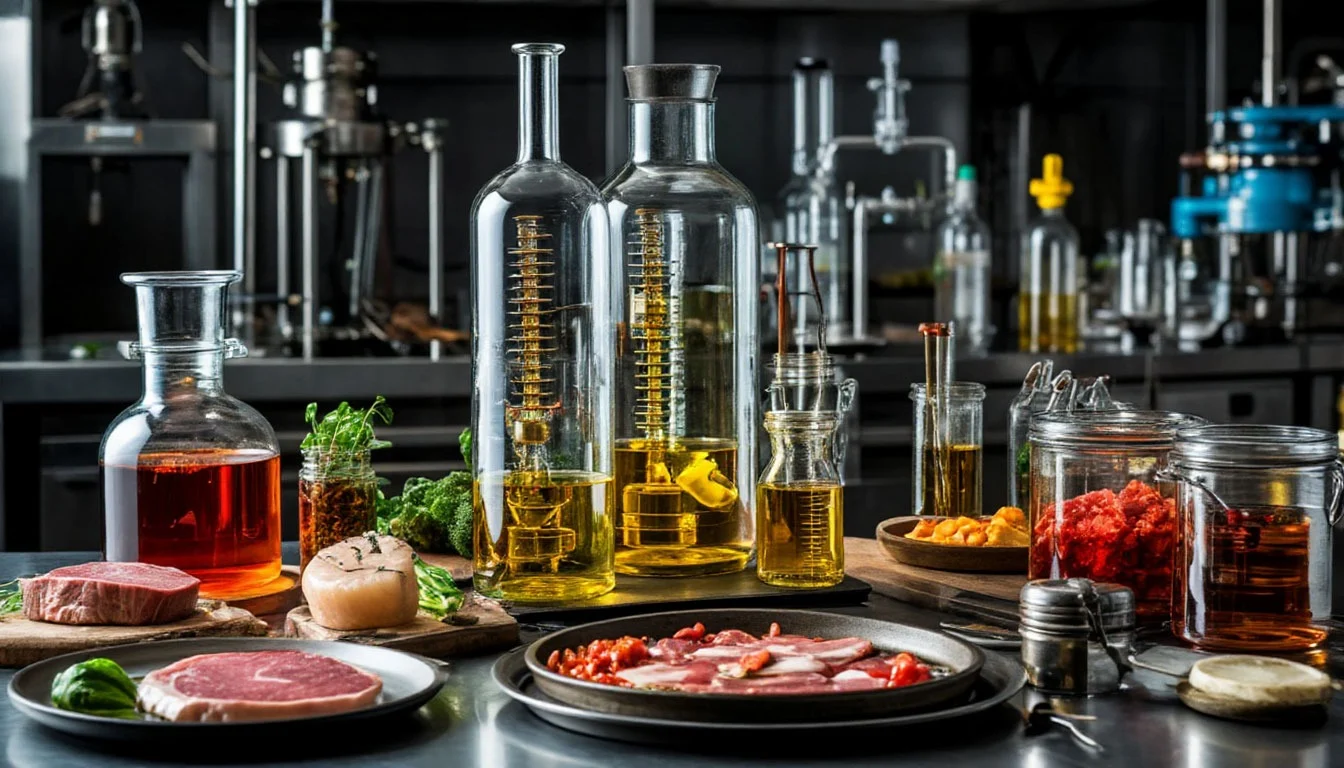



Synthetic gastronomy based on bioreactors eliminates global food logistics, turning cooking from a process of ingredient delivery into a process of local data materialization. This system is built on abandoning agriculture and animal husbandry in favor of precision fermentation.
Kitchen node architecture
Instead of a refrigerator and stove, each travel hub has a universal molecular assembler operating on the principle of 3D printing, but at the level of amino acids and fatty acids.
- Base pool (Chassis): the system uses a limited set of universal components: purified proteins (soy, pea, mushroom mycelium), plant fats and mineral salts. These substrates are produced centrally at huge solar biofarms from carbon dioxide and water, ensuring a zero carbon footprint.
- Digital flavor library: a dish recipe is not a list of products but a complex chemical code. The file “muksun stroganina” contains an exact map of fat-layer distribution, salt concentration in the tissues of northern fish, and the profile of volatile compounds responsible for the aroma of freshly caught fish.
Synthesis process
- Fermentation and assembly: the base pool is loaded into the bioreactor. Microscopic doses of enzymes and aromatic yeasts from a local cartridge are also introduced. The bioreactor imitates digestion or maturation: it can maintain the stomach temperature of a predator to break down proteins or the microclimate of a French cave for cheese cultures to work.
- Texturing: after the required chemical formula is obtained, the liquid or paste-like mass enters the chamber of a structural printer. Using an ultrasonic knife and directed cooling, the mass is arranged into a fibrous structure (meat imitation) or a crystal lattice (imitation of stroganina ice).
- Thermal and chemical finishing: to create a crust, instantaneous laser searing or induction heating is used, affecting only the surface while preserving molecular precision inside.
Gastronomic experience and ecology
- Absolute authenticity: synthetic muksun will be identical to the real thing at the RNA level, since it is assembled from the very same amino acids. Moreover, AI can improve the original: remove small bones from the fish, reduce mercury content or enhance the natural umami taste without disrupting the genetic profile.
- Disappearance of seasonality: a rare French cheese requiring three years of maturation under specific conditions is synthesized in 40 minutes. The bioreactor simply accelerates the chemical maturation reactions that take years in nature through precise control of pressure and bacterial colonies.
- Solving hunger and waste: the concept of an “expired product” disappears. Food is synthesized only on request. If a traveler does not finish a portion, the leftovers can be instantly processed back into the base protein pool without loss of quality.
Psychological barrier
The main challenge remains the “uncanny valley” effect in gastronomy. The brain may know that a dish is chemically perfect, but the absence of a “story” (the life of a cow, an apple ripening on a branch) may cause subconscious rejection. Therefore, synthetic cuisine platforms will sell not “synthetic” food but a “reference standard,” accompanying each portion with an AR overlay telling the legend of the dish’s origin in order to satisfy the human need for narrative.





Comments (2)
Идея интересная: если такой биореактор реально довести до ума, еда станет проще и доступнее, а свежие продукты не придётся везти через полмира. Понятно, что без привычного вкуса и запаха будет непривычно, но ведь и к новым технологиям мы когда-то привыкали. Вот интересно, а смогут ли такие приборы когда-нибудь стоять дома у обычной семьи?
Сильная сторона идеи — универсальный субстрат и цифровой рецепт вместо длинной логистики. Практическая доработка: начать не с полного синтеза, а с гибридных узлов, где ферментация даёт белок и ароматику, а принтер лишь текстурирует. Пилот можно собрать с ЭФКО: их экспертиза в ферментации, растительных жирах и пищевых ингредиентах плюс производственная база дадут субстраты и площадку для тестов. Первый шаг — рабочая группа с их R&D и технологами общепита на 3–4 месяца: сравнить мицелий и гороховый белок по текстуре и энергозатратам.