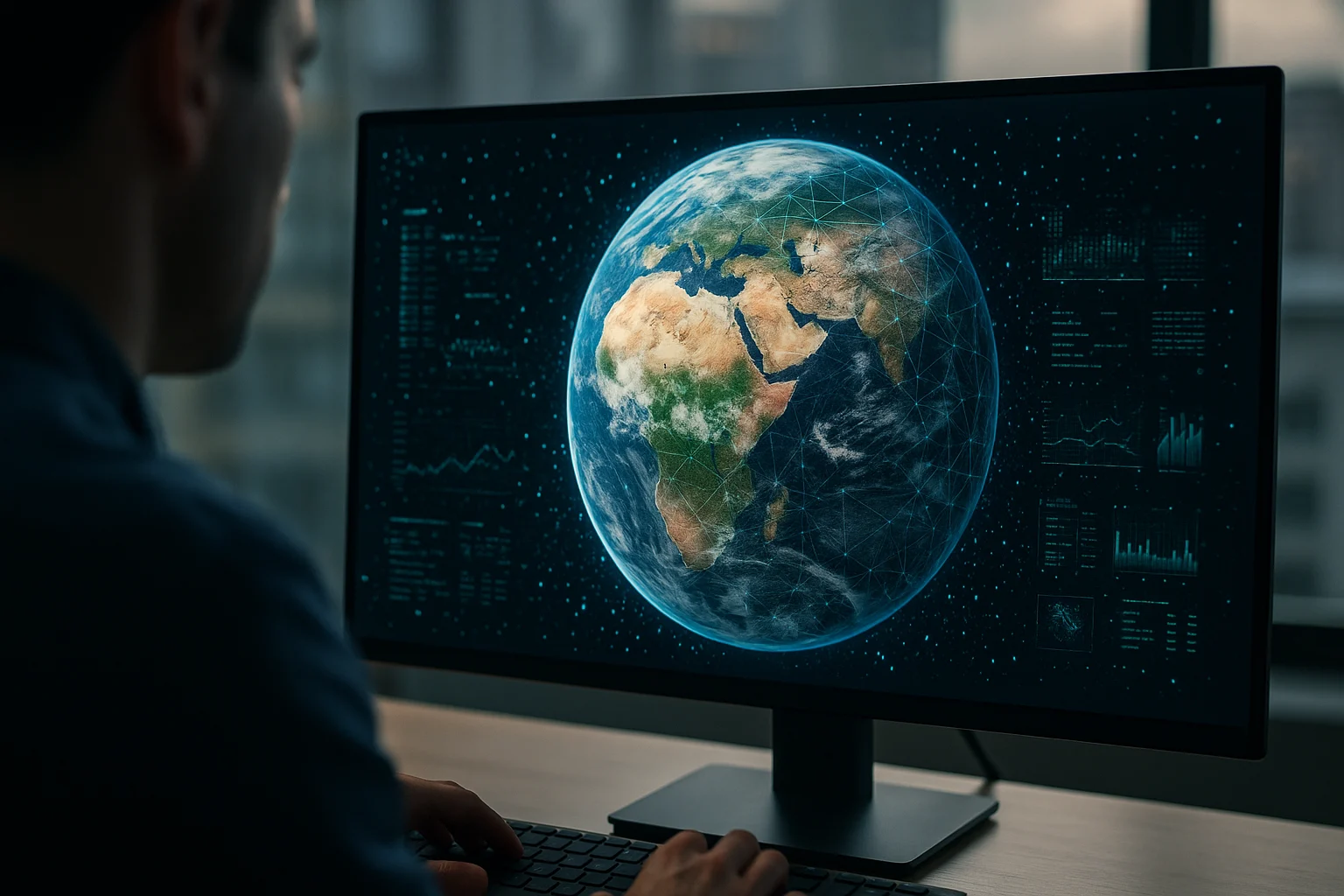
Ten years ago, humanity created a digital twin of the planet with accuracy down to every molecule. The model was not just a set of data — it was a living digital Earth, synchronized with the real one in real time. Every drop of the ocean, every gust of wind, every microscopic organism existed simultaneously in two worlds — physical and digital.
When the project launched, the first results stunned even skeptics. We were able to predict weather to the minute, see the emergence of climate changes years before they became noticeable. Thanks to this, unexpected droughts and destructive storms disappeared — instead came precise, gentle adjustments of natural processes. Engineers created targeted rains where the land thirsted for moisture; oceanographers restored the balance of currents; farmers received crop forecasts with ideal accuracy, preventing famine in any region.
The model became not only a climate management tool, but also a mirror in which we saw our own influence on the planet. People began to realize that every action — from choosing transport to urban architecture — is woven into the common fabric of the world. And this fabric was now visible to everyone. Citizens, companies and governments no longer argued about facts — everyone looked at the same picture in real time.
I contributed to this project by bringing together teams of climatologists and big data specialists. We created optimization algorithms that allowed the digital Earth not just to reflect reality, but to calculate millions of scenarios ahead. My task was to make this tool accessible not only to scientists, but also to ordinary people. Through an open interface, anyone could enter data about their city, district, even their garden — and receive accurate forecasts and recommendations on how to improve the local ecology.
The digital Earth has become part of everyday life. It is built into city panels, applications, educational programs. Children in schools watch how the atmosphere changes when a class plants trees. Farmers see in real time how their field is woven into the planet’s climate map. And most importantly, we no longer live in guesswork. We live in a world where the future is calculated, understood and carefully constructed.





Comments (0)