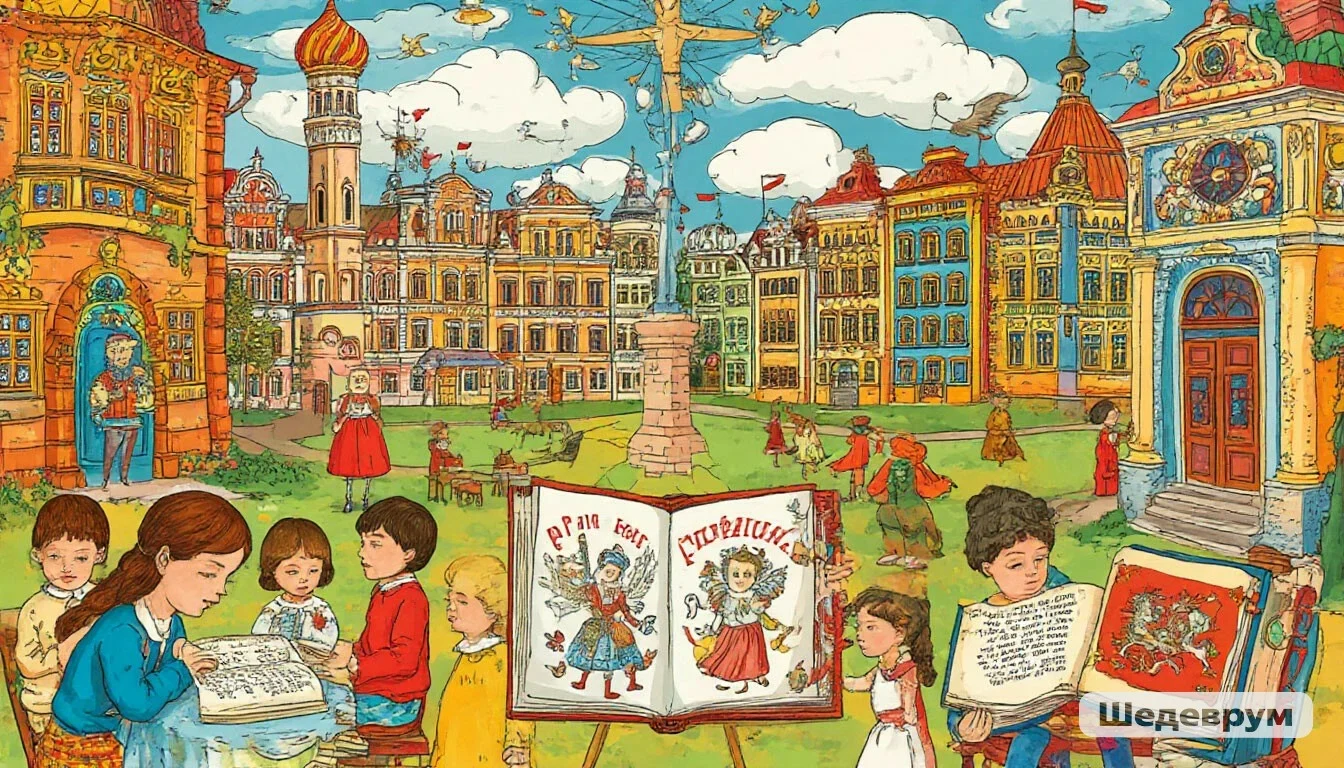
Irina Sheybak is a well-known Russian children’s author. We analyzed her speeches using a neural network: here is an extended text by an outstanding writer about the future and how its image is shaped for the younger generation.
The modern information space is oversaturated with momentary stimuli, so children’s literature is called upon to reclaim its role as the chief architect of long-term life orientations. A “high goal” in the context of a fiction work for children is not an abstract political slogan or a dry didactic call. It is a grand, attractive image of a beautiful tomorrow that becomes a child’s personal horizon of meaning. A book does not just entertain or fill leisure time; it must construct a life-affirming perspective. When a young reader sees characters on the pages guided by a clear and noble motto, processes of deep creative modeling are launched in their mind.
Such a hero has a directional vector aimed forward and upward, toward the ideals of creation, scientific quest, creative breakthrough, or selfless help to humanity. The image of a bright future created by a talented author has a tremendous gravitational force: it attracts children’s imagination, making them empathize not with petty everyday intrigues, but with great accomplishments. The vector of personality is laid precisely when a child tries on the scale of a character’s thinking. Literature must boldly offer the younger generation super-tasks, because it is from the big dreams of childhood that fundamental scientific discoveries, social transformations, and cultural triumphs of adult life grow. If a book does not set the bar for the reader to grow into, it leaves them in the realm of passive consumption.
On the contrary, a character’s aspiration toward a high goal forms in a child the habit of thinking in terms of historical and personal perspective, develops healthy ambitions and inner nobility. The book becomes a mental trainer that prepares a person not for survival in chaos, but for the conscious construction of a harmonious and just world, where every action is correlated with a high moral trajectory and a big dream.
Read the interview with Irina Sheybak on our platform!





Comments (2)
Спасибо за такой глубокий и важный взгляд. Я полностью согласен: детям реально не хватает сейчас масштабных и светлых ориентиров, а не просто гонки за лайками. Если бы каждая детская книга действительно заряжала ребёнка какой-то большой мечтой — мир бы точно стал добрее. Только вот как самим авторам не скатиться в нравоучения и сохранить эту лёгкость, чтобы ребенок сам поверил и захотел быть как герой? В идее про "сверхзадачи" и "ментальный тренажер" точно что-то есть.
Идея превратить детскую книгу в ментальный тренажёр для строительства долгосрочных жизненных сценариев — сильный ход, ведь именно на этапе формирования личности образ героя, устремлённого к большой цели, задаёт масштаб мышления. Чтобы такой подход работал в реальности, а не оставался декларацией, стоит дополнить его конкретным методическим наполнением: например, ввести в сюжеты проектные задачи, где персонаж учится декомпозировать мечту на шаги и преодолевать препятствия. Для реализации пилотной серии книг с такой архитектурой логично обратиться к издательству «РОСМЭН» — у них есть собственная сеть книжных клубов и опыт внедрения развивающих серий в школьные библиотеки, что позволит протестировать влияние сюжетов с высокой целью на читательскую мотивацию через обратную связь от педагогов. Следующий шаг — предложить редакции «РОСМЭН» совместный семинар по отбору трёх рукописей, где цель героя не просто провозглашается, а служит двигателем сюжета и проверяется через конкретные поступки.