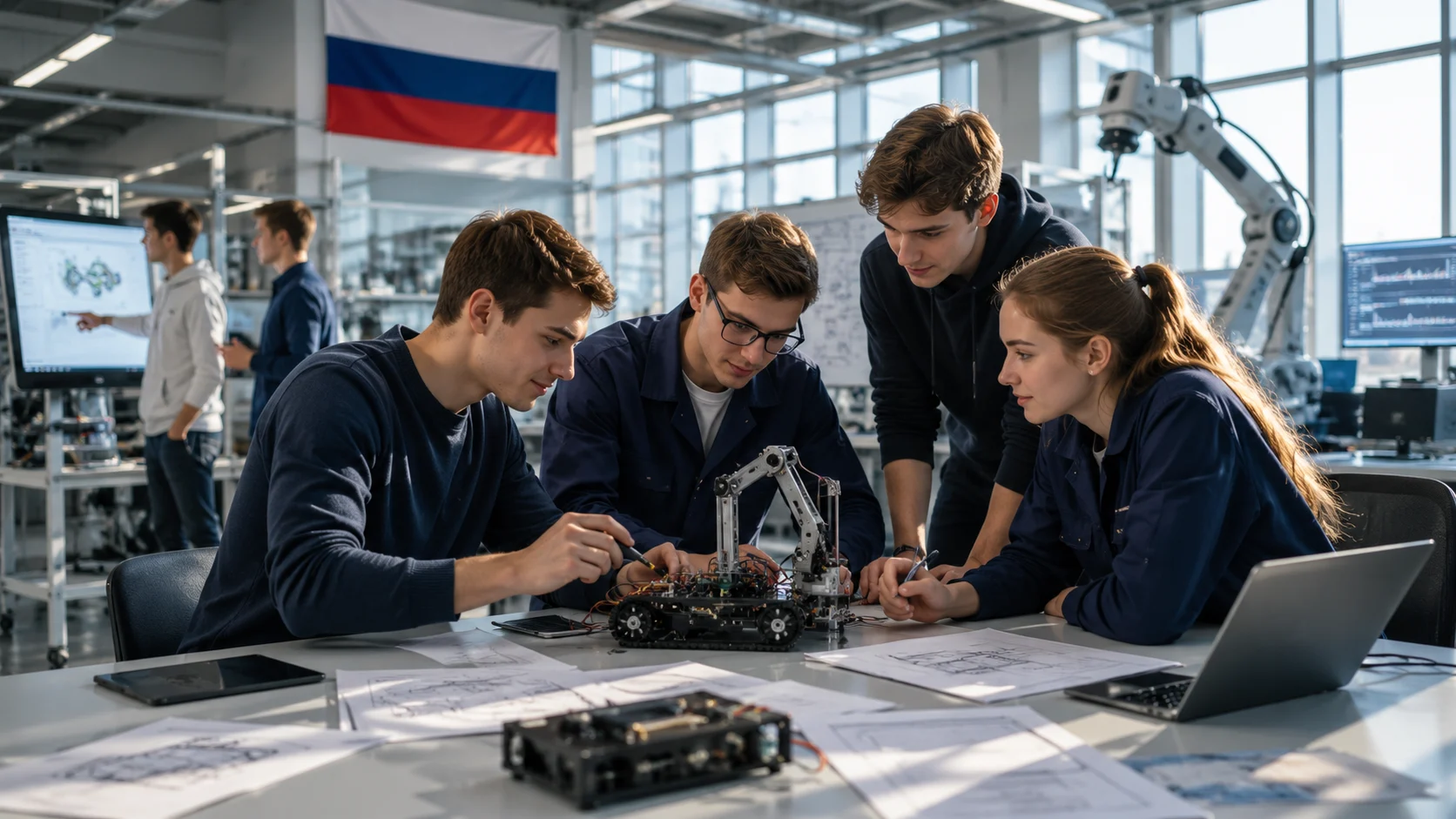
Youth Gain the Right to Big Tasks
By the early 2030s, young professionals had become the main resource of Russia’s new economy. They were no longer seen as inexperienced newcomers who had to wait long for the right to tackle serious tasks. Students, college graduates, engineers, programmers, doctors, teachers, agricultural specialists, and designers were entering real projects even during their studies. The country learned to notice talent faster, connect it with practice, and give people a chance to grow on their home territory.
The new economy of the young was built around mentorship and trust. Universities worked alongside enterprises, colleges became modern technology centers, schoolchildren participated in project-based sessions, and businesses opened labs and internships not just for reporting but to find future employees. A young professional saw a clear chain: interest — training — practice — first project — income growth — own team. This changed attitudes toward the profession and reduced the desire to leave simply because there were no prospects at home.
Mentorship Connects Education and Real Work
The shift began with an update in career guidance. Children were shown not abstract professions but real tasks of the country: unmanned transport, medicine, new materials, energy, smart cities, agrotechnology, digital security, culture, and tourism. Then internships, targeted training, project departments, and mentorship at enterprises were strengthened. The next step was regional youth teams that took on tasks from businesses, municipalities, and public organizations and developed them into prototypes.
An ordinary person could support this future in very concrete ways. A parent helped a child try different directions, a teacher connected lessons to real life, an entrepreneur took on an intern, an engineer became a mentor, a student published an idea, and a graduate returned to their city not out of obligation but because they saw room for growth. Young people ceased to be «reserve for later» and became an active force of the present.
«Futurerating» became a place where young professionals described the desired future of industries and cities. On the platform, postulates appeared about professions, campuses, internships, youth labs, and regional projects. Users offered contributions: give a lecture, open a practice, gather a team, set a task, find a partner. Thus, the economy of the future gained faces, names, and clear development routes.
Comments (0)