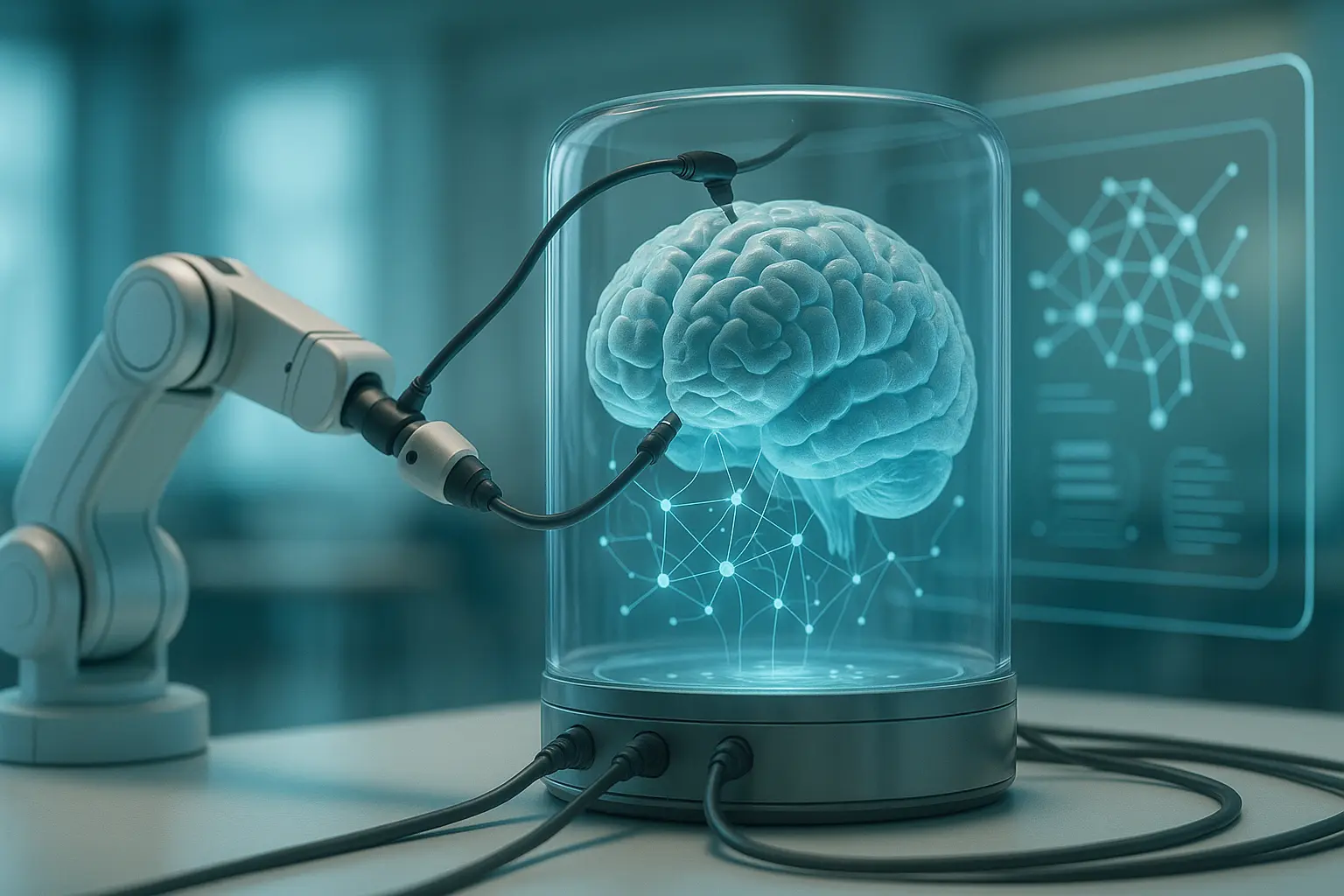
Neuroeducation and interfaces «brain-computer»
Neurointerfaces, direct brain-to-computer connection, adaptive learning, cognitive enhancements, neurofeedback
 In 10 years
Synthetic Empathy Prostheses
For a child with autism spectrum disorder (ASD), another person's emotion is an invisible, unpredictable, and often frightening physical process. The conversation partner's face…

 13
3
817
 In 50 years
Cognitive Shadow Architecture
The classical educational model is built on the infusion paradigm: the teacher pours knowledge into the student until the student overflows. For neurodivergent children…
 11
2
685
 In 50 years
Post-Language Communication
Post-language communication removes the linguistic barrier not by translating words but by directly transmitting intentions and images. Devices of the future stop being dictionaries…
 10
2
971
 In 50 years
Quantified Memory
Quantified memory moves the storage of impressions from the visual plane (photographs, video) into pure sensory biochemistry. At the end of a trip, the…
 10
3
1,5K
 In 10 years
Classroom Light Score
In a traditional school, light is a utilitarian function that floods the space with an even, lifeless stream of photons to prevent injuries. It…
 10
2
1,2K
 In 200 years
The Pedagogy of Simulated Empathy
Traditional empathy lessons — conversations about “accepting differences” — fail because the prefrontal cortex cannot sincerely empathize with something the body has never felt.…
10
3
1,3K
 In 50 years
Synaptic Pain-to-Color Translator in Animals
A synaptic pain-to-color translator is a neuroesthetic protocol that does not suppress the nervous system with sedatives but changes the very nature of perception.…
9
2
584
 In 10 years
Pharmacopoeial Botany of Attention
Attention deficit hyperactivity disorder (ADHD) is often mistakenly interpreted as a lack of attention. Physiologically, it is an imbalance of neurotransmitters in which the…
9
2
1,2K
No materials yet
There are no publications in this area yet





