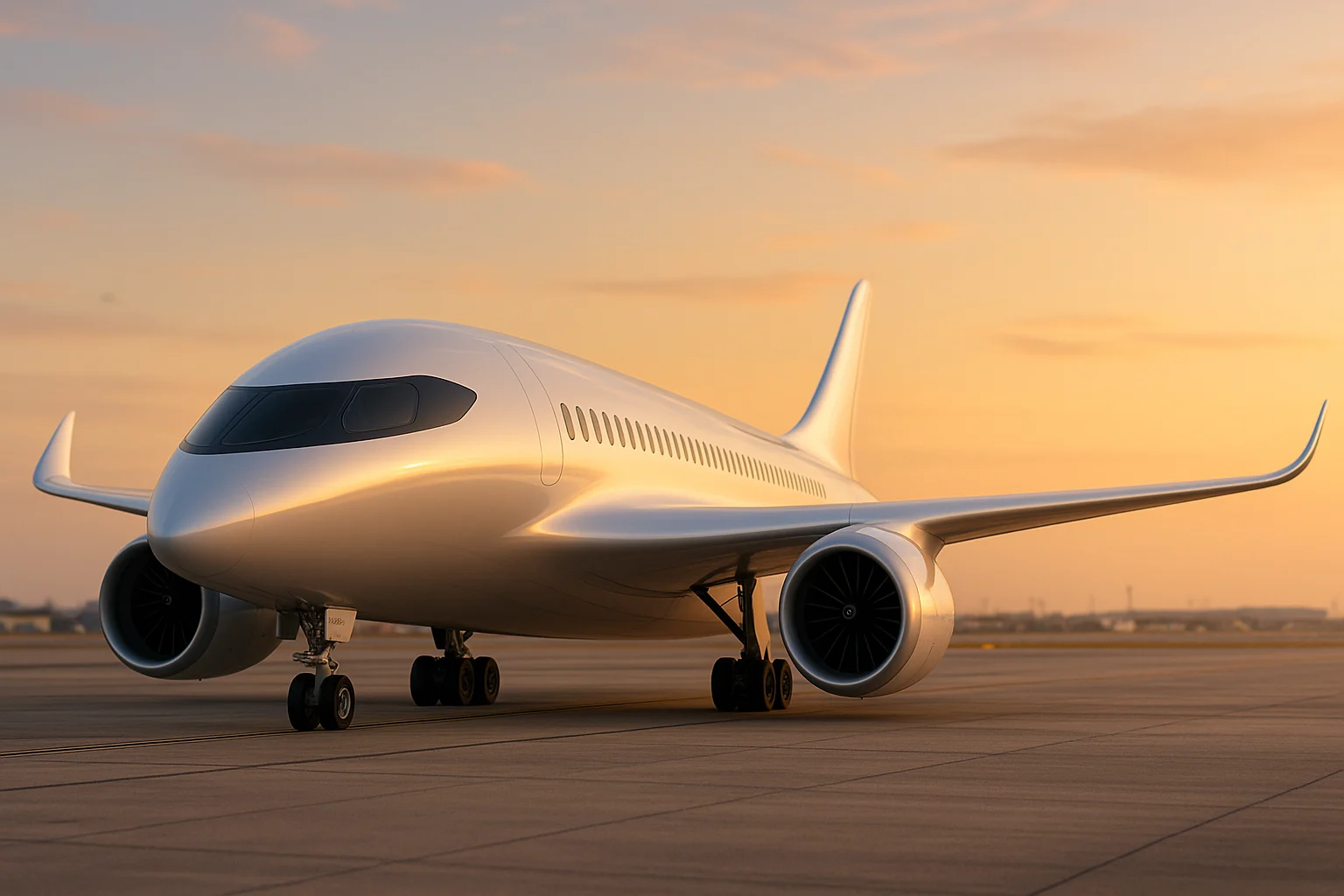
By 2035, the world’s air fleet will have transformed beyond recognition. Passenger aviation will have switched to environmentally friendly hybrid engines: takeoff powered by bioelectricity, and flight by new-generation hydrogen fuel cells. Thanks to graphene alloys and nanostructured composites, the fuselage will be 40% lighter and 2.5 times stronger. The silhouette will also change — the familiar ‘tubes with wings’ will give way to aerodynamic monoliths with integrated wings and a cabin within the load-bearing surface.
Aircraft will no longer produce noise, and even night flights will be comfortable for cities. Their movements will be coordinated by a satellite network of AI dispatchers, and pilots will become more navigators and operators of complex systems than manual handlers. Human errors will be reduced to almost zero, and thanks to a global weather predictor, turbulence on most routes will be a thing of the past.
Inside the airliners, class segregation will have disappeared. Every passenger will have access to a capsule space with individual lighting, noise cancellation, and the ability to work, rest, or socialize in a virtual environment. Flights of 10,000 kilometers will take just a few hours, and tickets will be affordable thanks to automated routes and minimal costs.
I had a hand in this future by launching an educational platform for young people, where I revealed the potential of aerospace technologies. We learned to design new models using digital twins, discussed the ethics of autonomous systems, and formed a community of engineers dreaming of lifting humanity into the sky. It was from this community that those who turned the dream into reality emerged.
The world will be closer. Los Angeles will be four hours from Sydney, and Yakutsk a step away from Rome. Airports will become ‘sky ports’ — technological, green, and smart.



Comments (0)