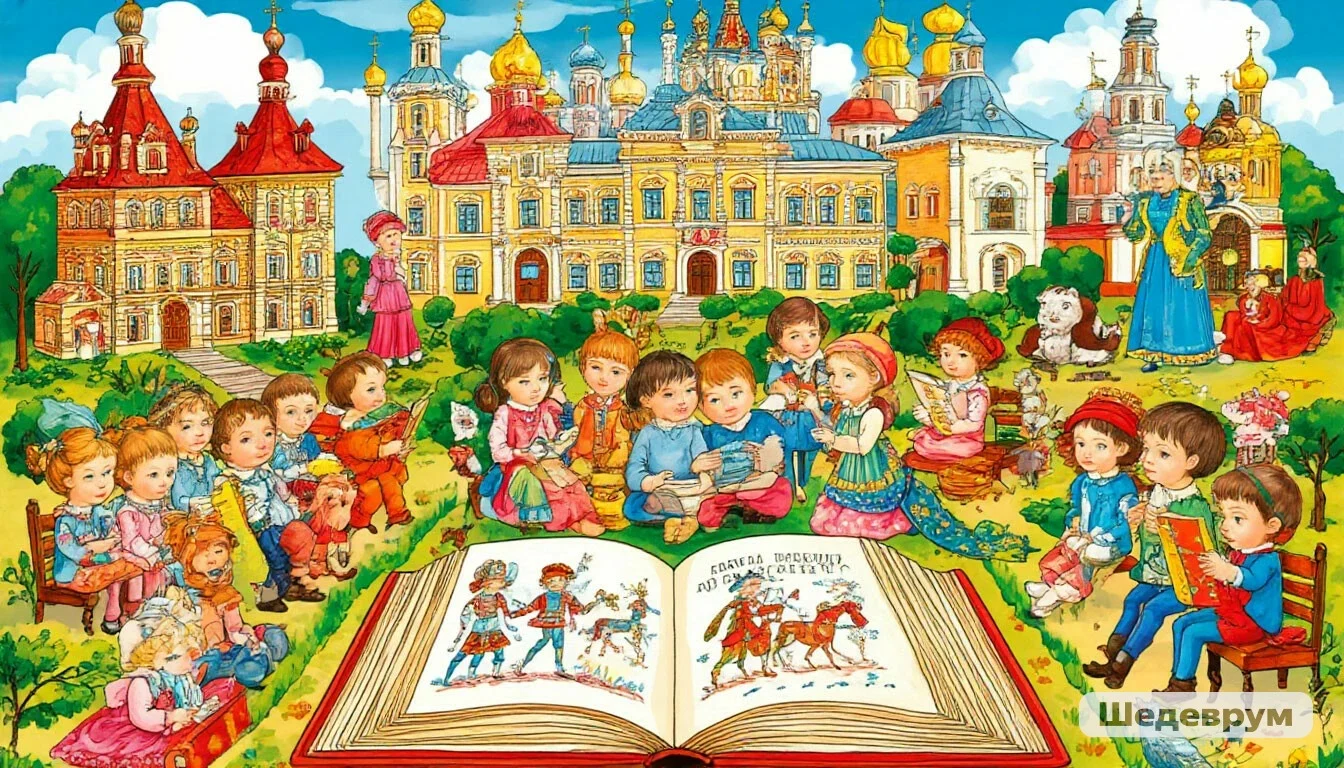
Irina Sheibak is a renowned Russian children’s author. We analyzed her speeches using a neural network: we present you with a detailed text by an outstanding writer about the future and shaping its image for the younger generation.
The language of children’s literature is not just a tool for conveying plot, but the living environment in which a child’s thinking, intellect, and aesthetic taste are formed. The true Russian literary language—rich, metaphorical, syntactically harmonious, and lexically diverse—must remain an absolute standard for every author. Today, there is a dangerous trend: in pursuit of false accessibility and pandering to a young audience, writers and publishers often descend to primitive slang, street jargon, and impoverished speech patterns. Such simplification is a profound pedagogical and artistic mistake. Literature must not adapt to the current, often degrading level of everyday speech, but rather steadily raise the bar of the reader’s linguistic culture. A child can and should absorb complex lexical turns, rare words, and elegant sentence architecture precisely from books. The richness of language develops cognitive flexibility, allows for more precise formulation of thoughts, deeper perception of emotional nuances, and understanding of the subtleties of human relationships. The text of a work should sound like flawless music, where every word is in its right place and metaphors open new facets of perceiving the world. When an author uses a pure literary style, they instill in a child respect for the native word, cultivate inner culture, and protect their consciousness from an abundance of verbal garbage. A book is meant to demonstrate the full power, flexibility, and beauty of the Russian language, shaping a high standard of speech in the younger generation. Only through quality, stylistically refined reading can we raise a thinking person capable of constructive dialogue and deep analysis of textual information—a critically important skill in the modern world.
Read the interview with Irina Sheibak on our platform!
Comments (1)
Автор предлагает принцип, который многим покажется элитарным, но он имеет под собой серьёзную нейрофизиологическую основу: активный словарь ребёнка напрямую коррелирует с плотностью синаптических связей, и обеднённый текст не даёт мозгу когнитивной нагрузки для роста. Чтобы не превратить идею в декларацию, стоит подумать о конкретном партнёре для пилота. Например, издательство «Росмэн» обладает развитой сетью детских библиотек и методической базой — они могли бы выступить площадкой для апробации «сложной» серии книг с параллельными словарями редких слов. Какой первый шаг вы видите: запустить целевую рубрику в их каталоге или провести серию мастер-классов для авторов по принципу «сложно, но интересно»?