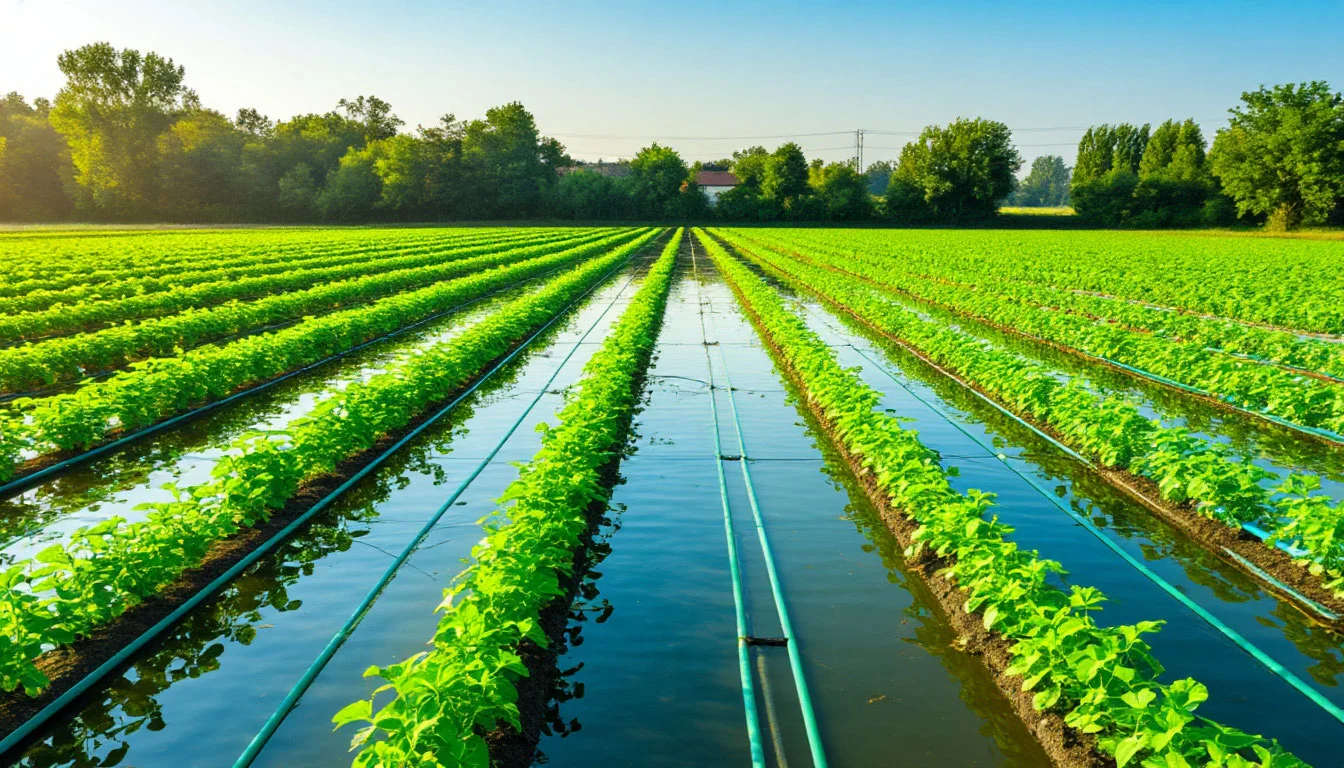
AI-powered precision irrigation is an automated irrigation control system based on real-time data. Soil-installed IoT sensors measure moisture levels using the time-domain reflectometry (TDR) method. This method determines the dielectric permittivity of the soil, which directly correlates with water content.
The system operates as follows: sensor data is transmitted to a cloud server, where machine learning algorithms analyze it along with meteorological information, weather forecasts, and crop characteristics. The AI calculates the optimal water supply volume for each field zone at a resolution of 10–20 meters. Control valves on drip lines or irrigation machines automatically adjust the flow rate. The coefficient of variation of irrigation decreases from the traditional 25–30% to 5–7%, ensuring uniform moisture without over-irrigating individual areas.
According to hydrological balance calculations, by 2032 such systems will reduce irrigation water consumption by 50% compared to traditional methods. In the Volga region, where moisture deficits annually cause losses of 15–25% of grain crops, precision irrigation will stabilize yields at 3.5–4 tonnes per hectare. Compensating for 20% of drought losses would make it possible to additionally obtain about 2 million tonnes of grain annually while maintaining the same planting areas.
Integration with drones and satellite NDVI imagery improves the accuracy of zonal management: algorithms identify zones with different plant water stress levels and assign individual irrigation schedules. The economic effect is achieved by reducing energy costs for water pumping (by 35%) and minimizing nutrient leaching. Service platforms such as «Digital Field» are already testing such solutions on 500,000 hectares, confirming the estimated savings of 120–150 m³/ha per year.
The long-term effect will manifest in the restoration of groundwater: reducing water diverted to fields will curb desertification and increase the resilience of agricultural ecosystems. By 2040, 70% of Russia’s irrigated lands will adopt precision technologies, ensuring food security under a changing climate. Certification to GOST R 56593-2015 simplifies implementation, and projects pay back within 2–3 seasons.



Comments (0)