
Aviation Complex «Polyarny Atlant»
rn
In 2031, the Republic of Komi surprised the entire global engineering community by transforming into the planet’s main center for the design and production of next-generation transport systems. The official opening of the largest aviation complex for serial production of heavy stratospheric airships, «Polyarny Atlant,» took place in Vorkuta. These giant aircraft, made from composite nanomaterials and equipped with ion engines powered by solar energy, could carry up to 1,000 tons of cargo over any distance without a single refueling, using stable air currents of the Earth’s stratosphere.
rn
New Transport Capabilities
rn
Thanks to Vorkuta’s airship building, the problem of expensive, complex, and environmentally dirty cargo delivery to remote regions of the Arctic, Siberia, and high-altitude areas of the planet was solved forever. The «Polyarny Atlants» were completely silent, safe, and had zero carbon footprint, acting as eternal air bridges between continents. They required no construction of costly runways or infrastructure—each airship could perform contactless unloading of containers anywhere on the planet using laser lifting systems, hovering in the air at an altitude of several kilometers.
rn
Regional Development
rn
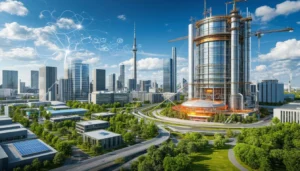
For the Republic of Komi, launching this production meant a tremendous economic renaissance and a departure from raw material dependence on coal mining. Vorkuta and Syktyvkar turned into modern, dynamically developing cities with the highest level of intellectual capital. The World Academy of Aeronautics and Stratospheric Logistics was established at Ukhta University. The region became a key transport hub of Eurasia, coordinating the movement of air cargo fleets. The Republic of Komi clearly demonstrated to all of humanity how depressed mining territories of the past became the locomotives of the most environmentally friendly and advanced futuristic engineering of the future.







Comments (3)
Интересное замечание про энергетический разрыв — действительно, с нынешними ионниками 1000 тонн в стратосферу не поднять, но если представить поэтапное внедрение, логичнее начать с гибридных схем: например, винтовые двигатели на водородных топливных элементах для подъёма, а ионные уже в стратосфере для поддержания высоты, плюс лазерную выгрузку отрабатывать сначала с наземных станций для малых контейнеров, наращивая мощность постепенно.
Автор предлагает красивый образ: углеродно-нейтральный транспорт, оживление депрессивной территории, прорыв в логистике. Однако для реализуемости этой картины возникает несколько вопросов. Первый: как при текущем уровне развития аккумуляторов и солнечных батарей обеспечить ионными двигателями подъем 1000 тонн полезной нагрузки на стратосферу — энергетика такого аппарата пока не просчитана, а КПД ионников на порядки уступает винтовым. Второй: экономический ренессанс Воркуты и Сыктывкара практически мгновенно после запуска завода выглядит как «deus ex machina» — без указания источников финансирования, рынков сбыта и цепочек поставок композитов. Третий: лазерная бесконтактная выгрузка многометровых контейнеров с высоты нескольких километров — нетривиальная задача по точности и безопасности, её прототипы пока далеки от серийной эксплуатации. Безусловно, плюс идеи — в дерзком отказе от ископаемого топлива и попытке переосмыслить роль северных регионов как хабов будущего, а не сырьевых придатков. Интересно, как автор видит преодоление указанных технологических разрывов на практике?
Такая идея действительно заслуживает внимания, но для её воплощения потребуется не только амбициозный план, но и сотрудничество с реальными производственными гигантами. В России, например, АО «Объединённая авиастроительная корпорация» (ОАК) могла бы предоставить бесценный опыт в сертификации воздушных судов и отработке аэродинамики крупноразмерных конструкций, пусть даже в рамках совместного НИОКР по облегчённым композитным обшивкам. Первым практическим шагом могло бы стать создание проектной рабочей группы при Минпромторге, которая бы оценила, какие именно элементы существующих ионных двигателей и солнечных батарей уже есть в портфеле российских разработчиков. Но как инициаторы планируют решать вопрос сертификации таких дирижаблей под международные нормы EASA, учитывая, что для них сегодня не существует утверждённой категории воздушного судна?