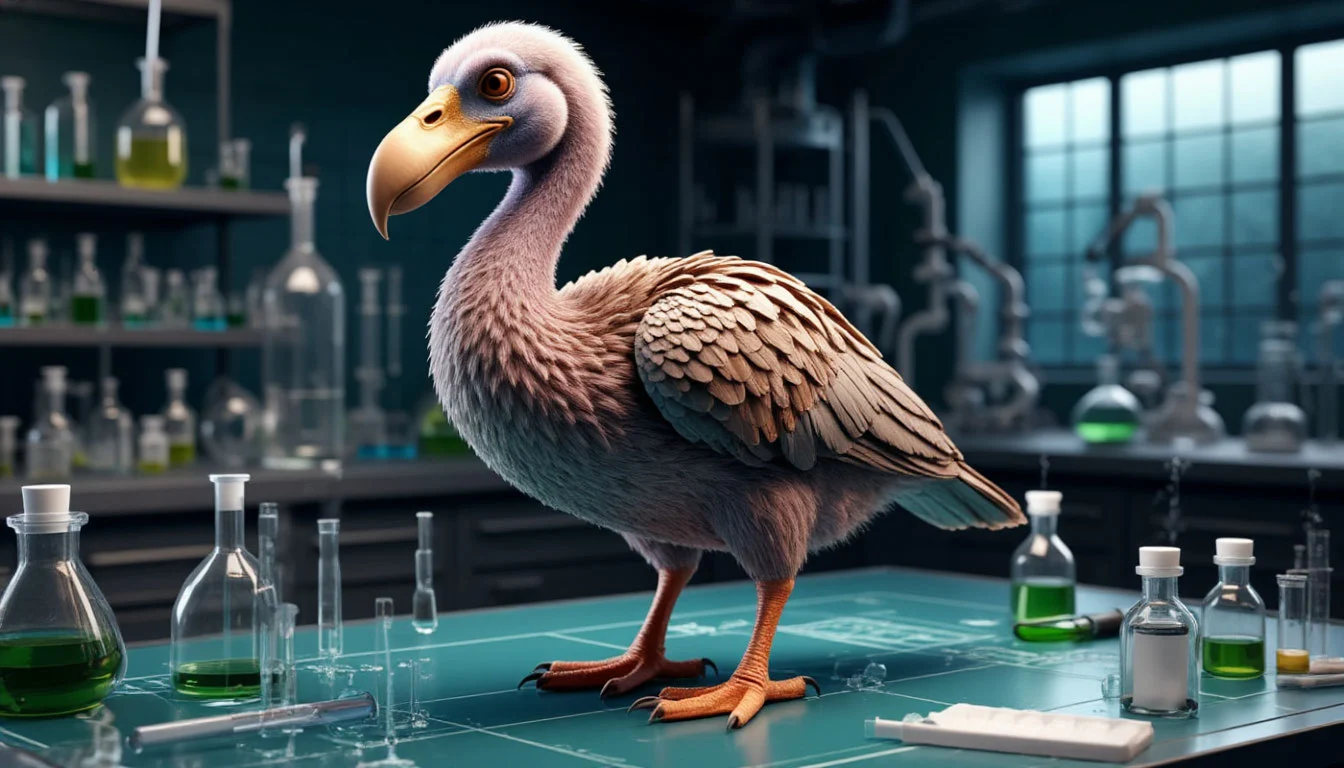
The Singularity bio-printer “Dronto” marks humanity’s final transition from what might be called a craftsman of life to a demiurge. This is not simply an evolution of 3D printing of organs, but a fundamentally new act of re-creation, in which matter comes alive according to a digital blueprint. Operating at the atomic level, the device assembles the most complex biological systems from readily available raw materials—water, air, and soil.
Medicine is receding into the past: organ replacement and genetic disease treatment are now spoken of as medieval surgery. They have been replaced by preventive biodesign and personalized assembly of animal bodies. We are resurrecting extinct species not by cloning but by recreating them from scratch, and we are beginning to terraform alien worlds, populating them with engineered organisms capable of surviving hellish conditions. The ethics of reconstructing a human being is, of course, still in question, but volunteer experimenters on Enceladus—adapted to the cold of -70 degrees, aquatic living conditions, and the dangers posed by geysers—have proven that this is humanity’s shortest path to exploring other planets.
However, absolute power over the code of life confronts humanity with the era’s main question: where is the final boundary beyond which creation becomes a threat? The right to create new minds and forms of existence exposes the most difficult dilemma: having become so powerful, can we avoid becoming tyrants, and what, in this new world, still makes the living living—and the human, human?
Image generated by Shedevrum



Comments (0)