Independence Becomes a Country’s Practical Strength
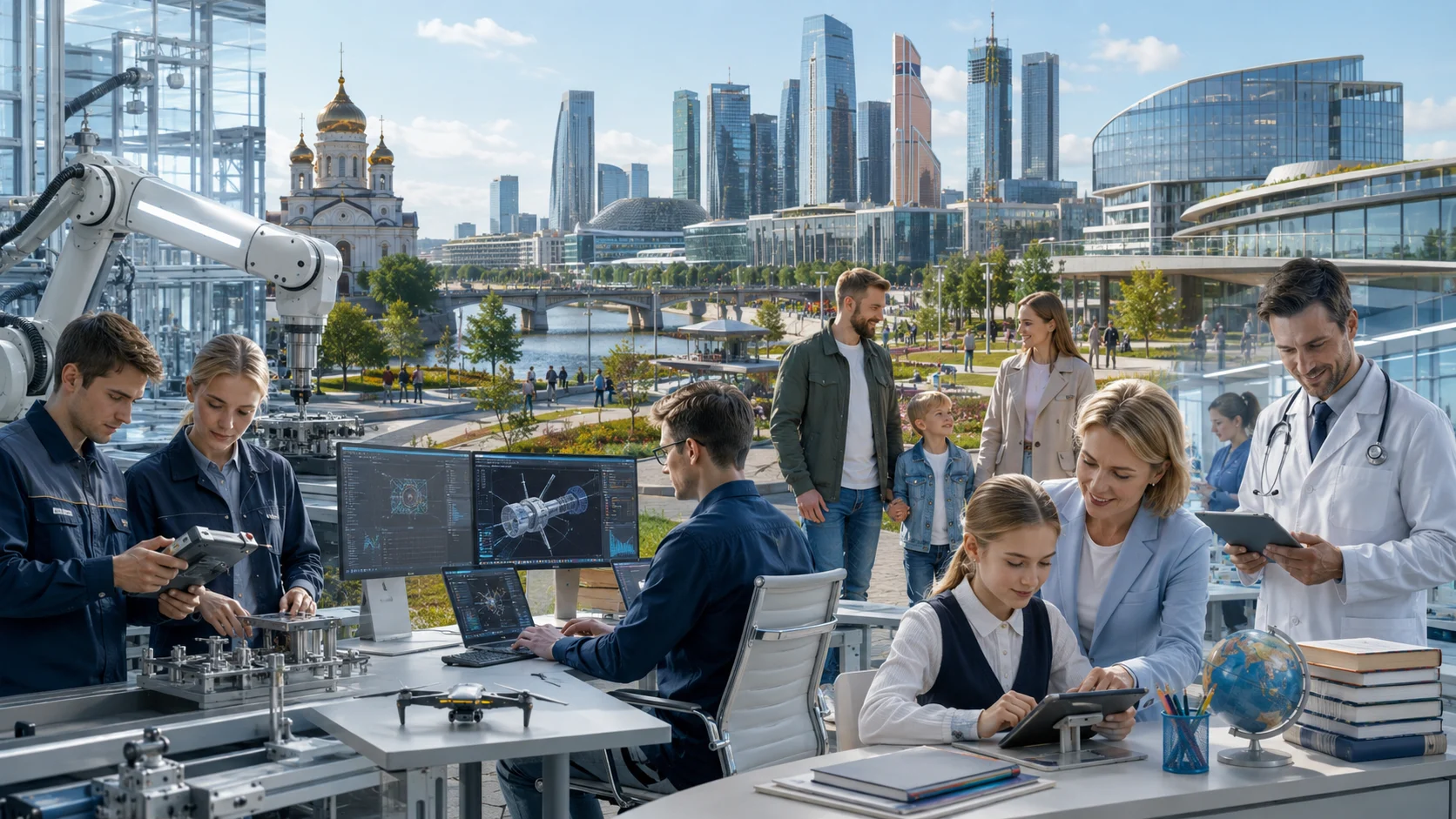
By the early 2030s, sovereignty had become the main capital of the state. It was no longer understood only as political independence. It manifested in a country’s ability to teach children in its own language of the future, produce critically important technologies, protect citizens’ data, develop culture, create jobs, and independently choose its path of development. Russia strengthened such sovereignty—practical, human, and creative.
In this future, independence did not mean isolation. On the contrary, the country became more open to equal cooperation because it relied on its own strengths. When you have your own engineers, medicines, platforms, schools, research centers, logistics, and financial mechanisms, partnership becomes more honest. Russia could negotiate without haste or dependency, offering the world not only resources but also ideas, technologies, cultural meanings, educational programs, and experience in developing a vast territory.
Sovereignty Is Built on Daily Decisions
The sovereignty roadmap was assembled from concrete actions. First, the country identified critical areas: data, communications, energy, transport, medicine, food, education, microelectronics, software, and urban infrastructure. Then, national projects with clear indicators, production orders, and workforce training appeared for each area. After that, work began on the culture of the future: people were told that sovereignty is built not only by laws but also by daily choices of quality, responsibility, and competence.
Ordinary people contributed through professionalism. Doctors mastered domestic digital tools, teachers prepared schoolchildren for engineering thinking, programmers wrote secure code, entrepreneurs developed local production, parents supported their children’s interest in science, and city residents participated in discussions of development projects. Sovereignty turned out not to be an abstraction but the sum of millions of tasks done well.
The Futurating platform became a space where people formulated sovereignty as an image of the desired future. Here, postulates emerged about technological self-sufficiency, cultural confidence, data protection, new professions, and strong regions. Users not only voted but also wrote what they were ready to do themselves: train, test a service, propose a project, connect experts, tell about an enterprise. Thus, the main capital of the state acquired a human dimension.








Comments (0)