In the 2060s, the transition to the seventh technological paradigm will begin. Its foundation will be:
— Quantum materials — the widespread use of superconductivity, superfluidity, and other quantum effects in the macroscopic world. If a room-temperature superconductor is discovered, it will radically transform the energy infrastructure.
— Next-generation biotechnologies — deep understanding and modeling of cellular processes, the ability to grow and repair organs, prenatal diagnostics and DNA correction, and the fight against aspects of aging.
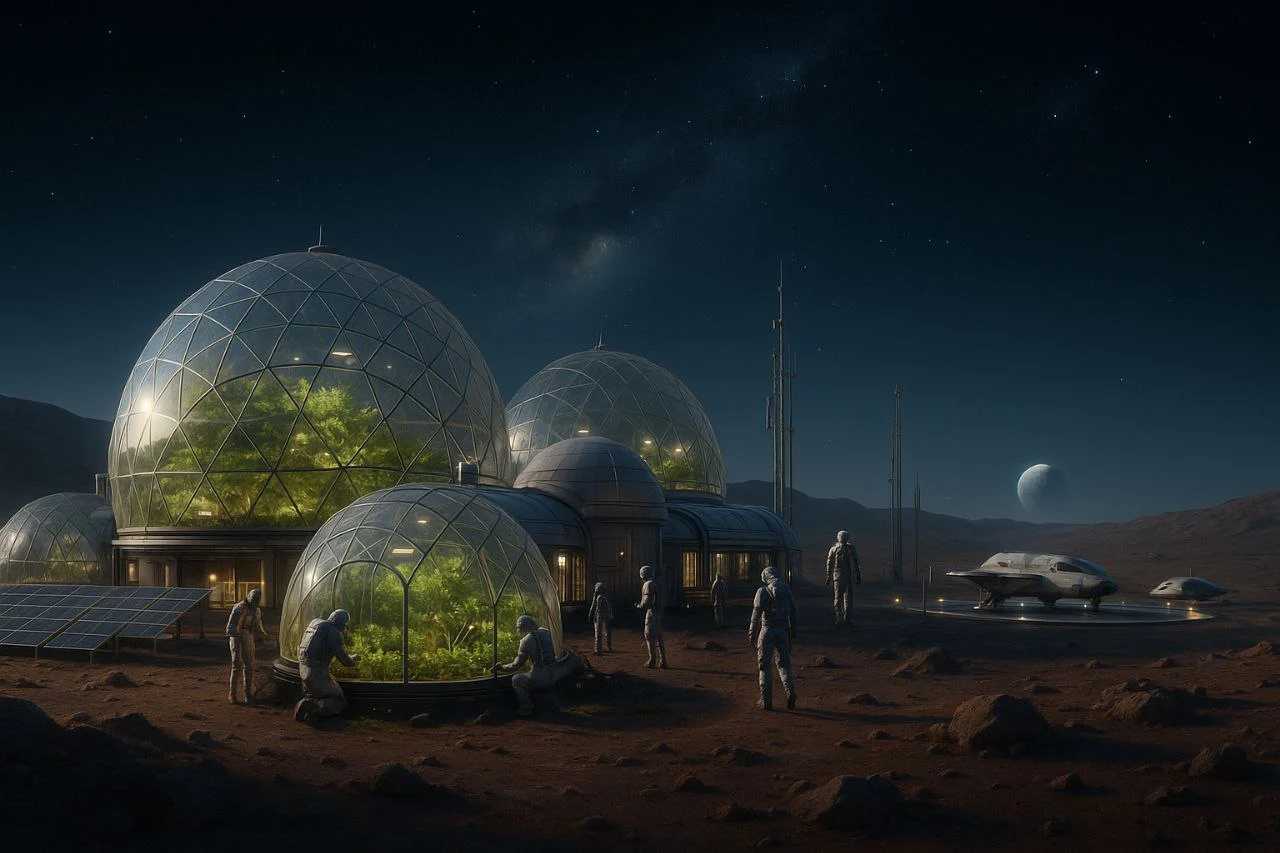
— A space breakthrough — creating closed ecosystems on space bases, exploring deep space with nuclear engines, and using early nanotechnologies and biotechnologies in space.
— IT as infrastructure — information technologies will cease to be a cutting-edge field and will become basic infrastructure, like electricity today.
Technological paradigms do not replace each other instantly. After rapid growth, a period of stabilization sets in, when society grows tired of constant change and requires time to adapt. The problem with the technological singularity theory is that it ignores social resistance to change: in practice, development follows an S-curve rather than an exponential curve.
It is too early to talk about the prospects of the eighth technological paradigm — there are not even hints of its outlines. One can assume that it will be associated with overcoming the light barrier and venturing beyond the Solar System, but this will require fundamental scientific discoveries.








Comments (0)