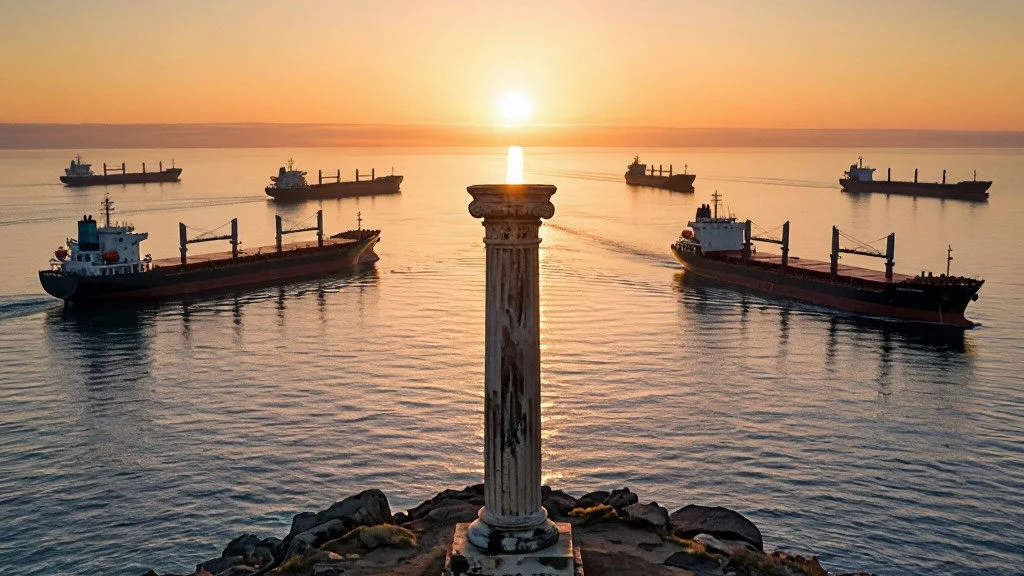


The dollar still exists, but it is no longer the only mandatory language of trade
The world no longer needs to look to Washington to know whether it can trade, save, or pay its debts. The dollar still exists, it is still important, but it has ceased to be the only mandatory language of global trade.
China, Brazil, India and the rest: alternatives that already work
China has paid for oil in yuan. Brazil and India have exchanged soy and technology without going through U.S. banks. The countries of Africa and Latin America, which for decades watched their economies sink or float according to decisions made at the Federal Reserve, now have more options: they can borrow in various currencies, diversify their reserves, and protect themselves a little better from a crisis they did not create.
For families in Cuba, Russia or Argentina
For ordinary families in countries like Cuba, Russia or Argentina — who know by heart what it is to see their currency melt against the dollar overnight — this world feels less fragile. Their savings, if they have any, no longer depend on a single country that can freeze accounts or impose sanctions with a signature.
A change that is not only relief
But the story is not only one of relief. A world with several strong competing currencies is also a more complicated world: more friction in trade, more volatility while the system finds its new equilibrium, and powers fighting for influence instead of sharing it. Some economists would say this also brings instability, not only freedom.
More a maturation than a war between currencies
Even so, in the most hopeful version, this change is not a war between currencies but a kind of maturation: the world has stopped depending on a single country to function, and each nation has gained a little more control over its own economic destiny.







Comments (1)
Идея автора про отказ от доллара как единственного языка расчетов практична: главный выигрыш — меньшая зависимость от чужой денежной политики. Но для запуска не хватает ликвидности в парах, хеджирования и работающих цепочек банков-корреспондентов, иначе издержки съедят выгоду. Пилотом мог бы стать Газпромбанк — у него есть расчеты в нацвалютах и каналы с азиатскими и эмиратскими банками. Первый шаг: рабочая группа с казначействами экспортеров и одна реальная сделка в юанях от контракта до платежа.