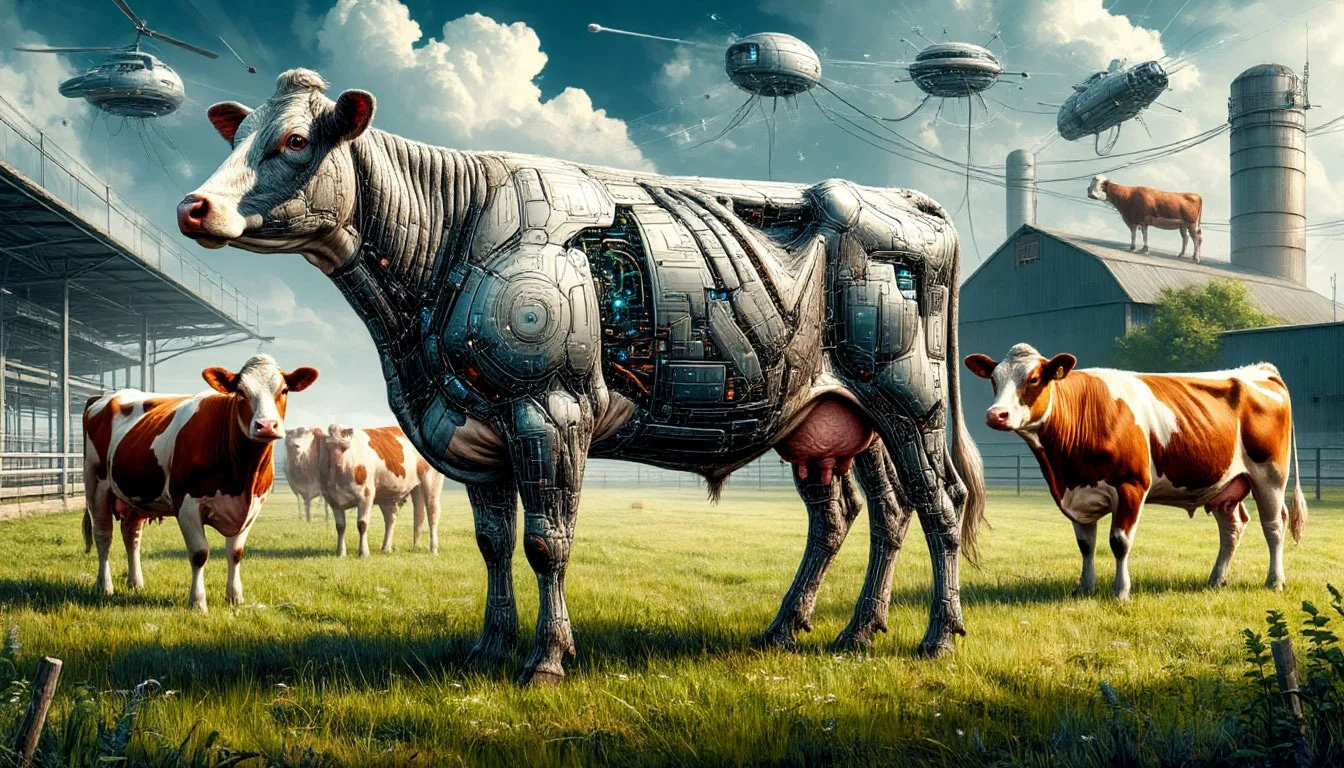
In the modern world, animal welfare has become a key indicator of efficiency in both agriculture and pet care. Stress—the main enemy of productivity, immunity, and longevity—is now almost completely controlled through automated systems. This technology helps maintain a stable psycho-emotional state in animals without constant human intervention, yet the exact mechanism of nervous system stabilization remains a subject of study.
How the stress management system works
The technology is a closed feedback loop consisting of three key elements: continuous monitoring, data analysis, and immediate intervention.
- Continuous state monitoring
Each animal is equipped with a lightweight biometric sensor (in the form of an ear tag, collar, or subcutaneous implant) that tracks a set of physiological and behavioral stress markers in real time:
- Physiological indicators: heart rate variability (HRV), cortisol level (measured from sweat or saliva), respiratory rate, body temperature.
- Behavioral patterns: analysis of vocalizations (cries, mooing, barking), movement speed, body position, and interaction with conspecifics. For example, a cow’s frequent aimless running or a cat’s nervous pacing in a cage are instantly detected by the system.
-
Intelligent analysis and trigger identification
The data is sent to a central server, where artificial intelligence analyzes it in real time. The system does not simply state the fact of stress («the animal is agitated») but also attempts to determine its cause: physical discomfort (too hot, hard floor), social conflict (aggression from another individual), or an external stimulus (loud noise). This allows the most appropriate countermeasure to be applied. -
Automatic intervention for stabilization
As soon as the stress threshold is exceeded, the system immediately initiates correction protocols. The intervention is always gentle, non-invasive, and aimed at calming the nervous system:
- Environmental adjustments: automatic regulation of indoor microclimate (lowering temperature, changing lighting to a softer setting), turning on «white noise» to mask frightening sounds.
- Neurostimulation: the implant can generate weak, safe electrical or vibrational impulses that stimulate the vagus nerve. This activates the parasympathetic nervous system, responsible for relaxation and recovery.
- Pheromone and nutrient delivery: the system can spray synthetic analogs of the animal’s calming pheromones into the air or add microdoses of natural adaptogens (e.g., L-theanine) to drinking water.
Why the mechanism is not fully understood
Despite its obvious effectiveness, science still cannot provide a comprehensive explanation of why these methods work so reliably and synergistically.
- Complexity of neurobiology. The nervous system is an incredibly complex network. Although it is known that vagus nerve stimulation reduces heart rate, the full cascade of neurochemical reactions in the brain leading to long-term anxiety reduction has not been fully mapped. It is unclear exactly how the brain integrates a combination of external influences (noise, light) and internal ones (neurostimulation, biochemistry).
- AI «black box». Artificial intelligence selects the optimal combination of intervention methods for each specific case, based on millions of other examples. Often, the chosen combination seems illogical from the perspective of human science. The veterinarian sees the result — «stress level normalized» — but cannot explain step by step why that particular dose of neurostimulation after changing the light color was effective. The logic of machine learning algorithms is too complex for full decoding by the human mind.
Thus, stress management has transformed from an art into a precise, data-driven science. The technology guarantees calm and well-being for animals, but the deep mechanisms of its operation continue to be one of the most intriguing mysteries in the fields of veterinary medicine and neurobiology.





Comments (1)
Автор предлагает хорошую рамку: не просто фиксация стресса, а замкнутый цикл с обратной связью и мультимодальным воздействием. Особого внимания заслуживает отказ от единого протокола в пользу адаптивного подбора комбинаций через ИИ — именно это отличает систему от существующих трекеров активности. Для пилотирования такой модели в российском животноводстве стоит присмотреться к «ЭкоНиве»: их молочные комплексы уже насыщены датчиками и централизованным сбором данных, так что интеграция модуля нейростимуляции (через ошейники или кормовые станции) и распыления феромонов может быть запущена на одной из площадок без строительства инфраструктуры с нуля. Конкретный следующий шаг — инициировать совместный проектный семинар с их отделом цифровых технологий и ветеринарной службой, чтобы определить, какие именно биомаркеры (вариабельность пульса или активность блуждающего нерва) будут опорными для алгоритма на первом этапе.