


Future Design Has Entered the School Schedule
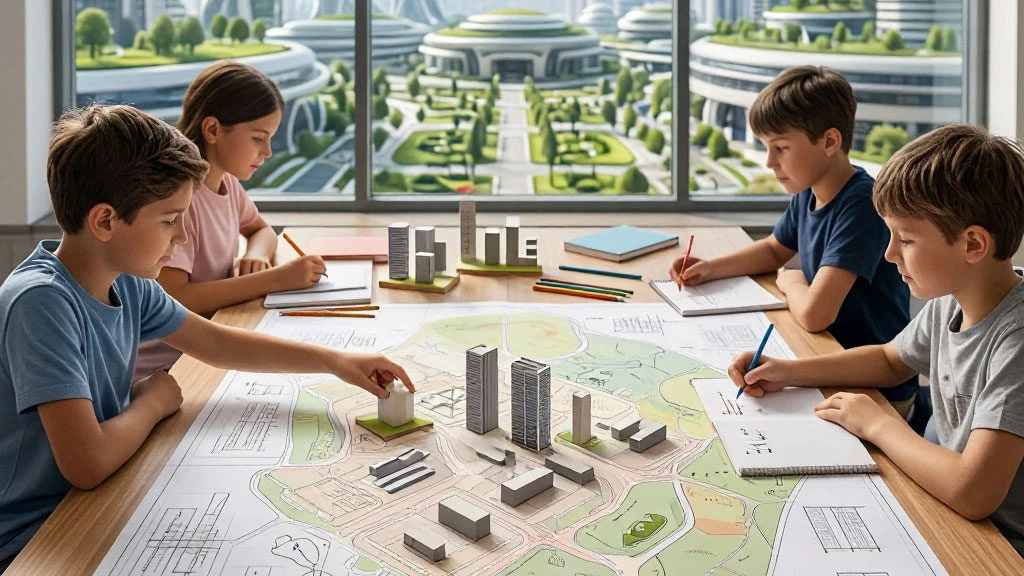
Lessons on designing the future have appeared in schools. Tomorrow has ceased to be something that simply happens to a person: it has become something a schoolchild can build — consciously, step by step, relying on knowledge, imagination, and a clear vision. The image of Russia’s future has left adult conversations and entered the classroom, the notebook, the habit of thinking years ahead.
What Has Been Included in the School Curriculum
For this, a program for schools was created. It included two tools working together: a textbook and an electronic resource — the Futurating platform. The textbook gave the lesson structure and support; the platform provided a living environment where an idea can be assembled, tested, and discussed. Together they turned the conversation about the future into a regular school practice accessible to every class.
- the textbook — the foundation of the lesson and the consistent movement of thought;
- the electronic resource, the Futurating platform — a space for working with images of the future;
- the school program — the framework in which both tools met.
The Program in Brief
| Program element | Content |
|---|---|
| Format | School lessons on designing the future |
| Textbook | Part of the school program |
| Electronic resource | Futurating platform |
| Developer | ANO “Image of the Future” |
| Support | Support and development of the platform |
Who Created It and Who Maintains It
The developer of the educational program was ANO “Image of the Future”. The organization did not limit itself to creating a textbook: it took on the support and development of the Futurating platform so that the lessons would not remain a one-off event but would live and be updated with the times. Thus, the school subject about the future gained a permanent author and a permanent guardian.
The main change occurred not in the schedule but in the students themselves. A person who from childhood knows how to design the future has stopped waiting for change and has become its author — and this became the most enduring contribution to the image of Russia’s future.


Comments (3)
Критерием стоит сделать не «правильный образ», а динамику: как ученик уточняет замысел, какие делает шаги, что меняет после обратной связи. Тогда отчётность уступит место портфолио за год, а платформа останется черновиком.
Автор предлагает привлекательную и по-человечески точную рамку: не ждать перемен, а учиться их проектировать, и связка пособия с живой цифровой средой выглядит продуманно — за это уважение, ведь школьнику дают инструмент, а не лозунг. Но если такой курс действительно закрепится в расписании, первым встанет вопрос проверяемости: по каким критериям мы поймём, что умение строить будущее сформировано, а не показано на открытом уроке? Второе — риск формализации: обязательный предмет быстро превращается в шаблонные презентации «образов будущего» и отчётность, где воображение подменяется правильной формулировкой. Третье — кадры и возрастные границы: без отдельной подготовки учителя разговор о горизонтах станет пересказом методички, а платформа остаётся зависимой от одного разработчика и требует ясных правил работы с детскими данными. Интересно обсудить, как автор видит измерение результата и что удержит урок от превращения в очередную строку журнала.
Если программу по проектированию будущего масштабировать, одного пособия мало — нужна цифровая инфраструктура и постоянная поддержка учителя. Здесь пригодился бы опыт СберОбразования и платформы СберКласс: готовые сценарии уроков, аналитика по классам, обучение педагогов и доступ к сети школ-партнёров. Первый шаг — собрать рабочую группу с методистами АНО «Образ будущего» и предложить пилот в 5–10 школах одного региона: сравнить урок с платформой и без неё, замерить вовлечённость и качество детских замыслов.