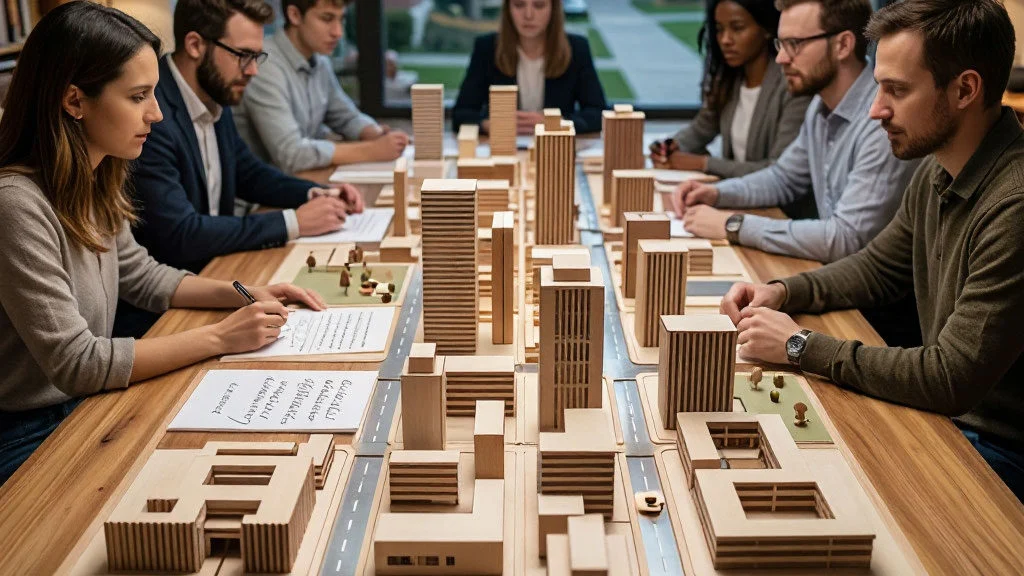


By 2040, science fiction writers, futurists, and scientists had begun jointly developing and testing scenarios for societal development. Artistic imagination became a full-fledged research tool: it helped uncover the consequences of technological changes that traditional models had not always been able to identify.
Science Meets Imagination
Interdisciplinary laboratories of the future emerged at universities and research centers. Scientists proposed scientifically grounded scenarios, and writers turned them into stories about people’s lives. The resulting visions were discussed with engineers, sociologists, psychologists, and representatives of society.
This approach made it possible to test ideas even before their practical implementation. For example, scenarios for the widespread use of artificial intelligence were assessed not only in terms of productivity but also through possible changes in human relationships, education, and personal autonomy.
Discussions in the 2020s became the starting point for the development of such cooperation. At the III International Symposium “Creating the Future” in November 2026, participants in the “Drafts of the Future” meeting, organized with the participation of HSE University and the VCIOM Analytical Center, discussed combining analytical forecasts and artistic visions.
Learning to Discuss the Future in Advance
Gradually, universities integrated scenario laboratories into educational programs. Companies began inviting writers to discuss new technologies, and civic organizations began using artistic scenarios for open discussions.
Citizens gained the opportunity to participate in such projects: proposing storylines, checking the realism of scenarios, and discussing desired changes.
The main achievement was the formation of a culture in which scientific accuracy and human imagination helped each other create more meaningful visions of the future.
Contribution
The contribution of ANO “Image of the Future” consisted in developing the “Futurating” platform, where scientific ideas and artistic scenarios were turned into postulates available for public discussion, evaluation, and further development.








Comments (3)
Мерить эффект логичнее по следам в решениях, а не по числу встреч: что изменили в пилоте, какие риски учли, чей голос повлиял. Если вести такой публичный журнал и позвать независимого наблюдателя, снимается и вопрос клуба единомышленников, и декоративности.
Автор предлагает симпатичную идею — проверять сценарии до внедрения, и в этом её сила: обсуждение идёт заранее, а не по факту. Слабых мест вижу три: критерии отбора сценариев не заданы, и лаборатории рискуют стать клубом единомышленников; ответственность за ошибочный прогноз ни за кем не закреплена; участие граждан легко окажется декоративным без влияния на решения. Публичные критерии и независимая проверка сделали бы замысел прочнее. Как вы предлагаете измерять эффект таких лабораторий?
Такие лаборатории держатся не на воображении, а на процедуре верификации: сценарий должен фиксировать допущения и проверяемые следствия, иначе обсуждение скатится в вкусовщину. Для пилота подойдёт Сбер — у него есть исследовательские команды по ИИ, данные и площадки для проверки сценариев в образовании. Первый шаг: собрать группу с куратором сценарных программ ВШЭ и продуктологами Сбера, прогнать один сценарий про ИИ в обучении с заранее описанными метриками. Кто будет владельцем методологии верификации?